Filling the Gap With a Fixed Bridge
A dental bridge replaces one or more missing teeth with a false replacement, called a pontic, that’s held in place by dental crowns on either side, and because it’s fixed, nothing comes out at night. If your aim is to hang onto your natural teeth and smile well into old age and stay off the denture path, a gap is worth dealing with sooner rather than later, because everything around it doesn’t stay put. Below we cover how a dental bridge works, the different designs, the cleaning routine you’ll need, and how it stacks up against an implant or a partial denture.
For people in coastal Redland Bay, QLD, a fixed bridge can help restore chewing, appearance, and everyday comfort. Alexandra Hills Dental is accessible from Victoria Point, the Redland Coast, and surrounding coastal QLD areas. If you are considering a bridge, you can schedule a dental assessment with our team of dentists to discuss the gap and the available options for your dental health.
Restorative dentistry looks at more than the visible space. Our dentists consider your bite, gums, and overall oral health before recommending a way forward. Where the gap is visible, our dentists can also consider the cosmetic result when planning. For someone travelling from Victoria Point or another coastal QLD suburb, the first dental appointment provides a useful starting point for comparing a bridge with an implant or partial denture.
Why Neighbouring Teeth Drift Into an Empty Space
A gap rarely stays just a gap. The surrounding teeth help keep everything in position, so when one tooth is lost, its neighbours can slowly tilt and drift into the space. The opposing tooth, in the other jaw, can also start to over-erupt because it has nothing to bite against.
What a gap can lead to
- Neighbouring teeth tilting and drifting into the space
- The opposing tooth over-erupting
- A bite that is thrown out
- Spaces where food gets trapped, making gum disease more likely
- Bone shrinking once the root is gone
Over time, that can throw your bite out, open up spaces where food gets trapped, and make gum disease more likely. Bone in the area also shrinks once the root is gone. None of this happens overnight, which is exactly why it’s easy to ignore. A bridge holds everything in place and spreads the force of chewing evenly again. It can also help with speech and with the shape of your face where loss has made the cheek look sunken.
This is an important part of restorative dentistry. Once a gap starts affecting the bite, correcting those changes can become more involved. A dental assessment allows our dentists at Alexandra Hills Dental in Queensland to look at the space, bite, and every surrounding tooth before deciding what option is required.
People from Victoria Point and communities along coastal Queensland do not need to wait until the gap becomes uncomfortable before having it assessed. You can schedule a dental review simply to find out what is happening and whether restorative dentistry is appropriate.
The Abutments and What They Carry
The teeth on either side of the gap are called abutments. In a traditional bridge, they’re shaped to take a crown each, and those crowns hold the pontic in between. That means they’re carrying the load of an extra replacement every time you bite.
A traditional bridge: two crowns holding the pontic in between
So before any of our dentists at Alexandra Hills Dental in Queensland recommend a bridge, we check each tooth carefully, often with an X-ray. If there’s any decay or gum disease, we sort that first, so your bridge has a strong foundation. The trade-off is honest: shaping healthy neighbouring structures removes some natural material. If they already have big fillings, crowning them can be a bonus. If they’re pristine, an implant might make more sense, and we’ll say so.
This assessment is a key part of restorative dentistry. Our dentists need to make sure the proposed supports are suitable and that the surrounding gums are healthy. The main goal is to establish a stable foundation before getting a bridge.
If you are coming from Victoria Point or elsewhere in coastal QLD, you can book the assessment first and make a decision once the X-ray and dental examination are complete.
Four Bridge Designs and When Each Suits
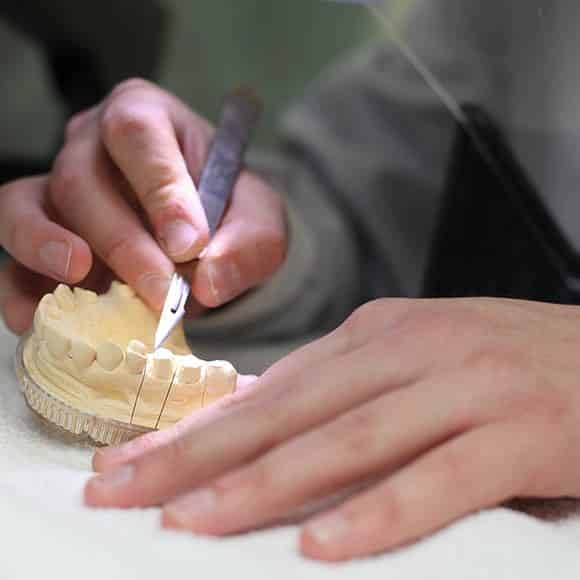
There are four main designs used in dentistry, and the right one depends on where the gap is and what’s on either side of it.
| Design | How it is held | When it suits |
|---|---|---|
| Traditional fixed bridge | Crowns on both neighbouring supports hold the pontic | The most common design, strong and durable |
| Cantilever bridge | Anchored on only one side | When there's only one suitable support. Less common |
| Resin-bonded (Maryland) bridge | Small wings on the back of the neighbouring support, with little or no shaping | Usually near the front of the mouth, where the bite is light |
| Implant-supported bridge | Sits on dental implants | Larger gaps, when several teeth in a row are missing |
Modern dentistry gives our dentists at Alexandra Hills Dental in Queensland several ways to approach the same problem. The right design depends on the location of the gap, the forces placed on it, and the available support.
Where appearance is particularly important, cosmetic factors can also influence the bridge design. Your dentist may consider shade, shape, and how the restoration will sit down the road within your smile as part of the overall dental plan.
For people from Redland Bay, Victoria Point, and other coastal QLD suburbs, bridge planning should be individual. What works well in one situation may not suit another, from routine to emergency, which is why a dental examination comes first.
Implant-Supported Bridges for Larger Gaps
The fourth design sits on dental implants. When several in a row are missing, a few implants can support a longer bridge without loading your remaining natural structures. It’s a bigger investment and takes longer, because the implants need months to bond with the bone first, but it protects what you still have. We’ll talk you through whether you’re a candidate.
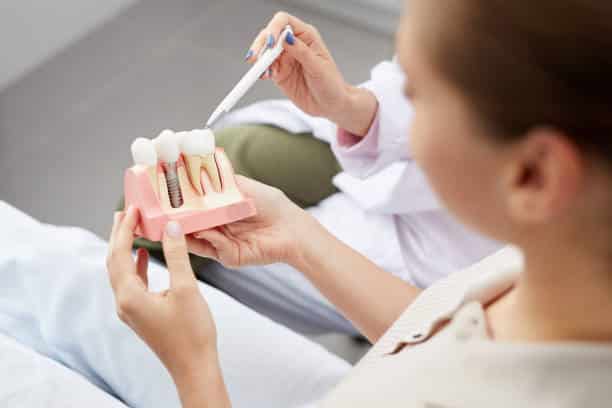
Implant-supported bridges are another part of restorative dentistry, and our dentists can compare the timeframe, costs, and maintenance requirements with those of a conventional bridge.
If you are on the coast of Redland Bay or nearby coastal suburbs weighing up several options, book a dental assessment rather than assuming one approach will automatically be better. Every dentist from our team at Alexandra Hills Dental in QLD can explain the differences between each option and any additional dental services that may be required.
Impressions, Lab Work, and the Final Fit
Once the foundation is healthy, the process usually runs like this.
- Shaping the abutmentsThe abutments are shaped under local anaesthetic to make room for the crowns.
- Impression and lab workAn impression is taken and sent to the dental lab, which builds your custom bridge to match the colour and shape.
- Temporary bridgeA temporary bridge goes in so you're not left with a gap while you wait.
- Final fitAt your next visit, the permanent bridge is checked for fit, bite, and colour, then cemented in place.
| Material | What it offers |
|---|---|
| Full porcelain | A natural colour |
| Porcelain bonded to metal | Additional strength underneath |
| Full metal | Strength, chosen based on where the gap is and how you bite |
Bridges can be made from full porcelain with a natural colour, porcelain bonded to metal with additional strength underneath, or full metal. We’ll recommend a material based on where the gap is and how you bite.
Your bridge is also checked within the context of your bite and oral health. Where it will be visible, cosmetic details become part of the dental planning process. Your dentist will check colour, shape, and overall appearance before the permanent bridge is cemented.
Our bridge services generally involve more than one dental visit because the restoration is made by a laboratory. People travelling from Victoria Point, the Redland Coast, or another coastal QLD suburb can book the appointments ahead so the laboratory stage fits their schedule.
Alexandra Hills is connected by Redland Bay Road and the surrounding road network, making it straightforward to travel from nearby coastal QLD suburbs for each stage of the process. If you have a dental emergency, we can help!
Getting Used to Chewing on a Bridge
Because a bridge is supported by natural structures, it feels natural when you eat, and most people stop noticing it quickly. For the first few weeks, the supporting area can be sensitive to hot and cold. That’s common and usually settles.
If the gap was near the front, some words can feel slightly different for a few days while your tongue gets used to having the space filled again. That usually sorts itself out quickly, and many people find their speech is clearer than it was with the gap.
Settling in
- Sensitivity to hot and cold for the first few weeks is common and usually settles
- Some words may feel slightly different for a few days
- Start with softer foods for the first day or two
- If your bite feels high, or one side hits first, call us for a quick adjustment
Start with softer foods for the first day or two and work up from there. If your bite feels high, or one side hits first, call us. A quick adjustment makes a big difference to comfort.
If something still feels uneven after fitting, book a dental review. Your dentist can check the bite and make an adjustment where required.
Follow-up is a major part, and these dental services also give us a chance to check how the restoration is settling and answer questions about eating or cleaning.
Superfloss, Interdental Brushes, and Water Flossers
This is the part nobody tells you before you get a bridge. Because the crowns and pontic are joined, normal floss won’t pass between them. Food and plaque can collect under the pontic, and that’s where decay and gum problems around a bridge usually start. A good routine looks like this:
Your bridge cleaning routine
- Brush twice a day with fluoride toothpaste, paying attention to the gum line around the bridge
- Clean under the pontic daily with superfloss or a floss threader
- Use interdental brushes in the gaps beside the abutment teeth
- Consider a water flosser if threading floss is fiddly for you
- Go easy on ice, boiled lollies and hard nuts that can chip or loosen the bridge
We’ll show you exactly how to do it before you leave, so you’re not guessing at home.
Good cleaning is particularly important around a bridge. Preventive dental services give your dentist an opportunity to inspect the restoration, gums, and bite during regular visits.
If cleaning underneath is difficult, book a dental review, and we can demonstrate the technique again. Good maintenance helps protect the result once bridge treatment is complete.
Signs a Bridge Needs Attention
Call us if
- Your bridge feels loose or moves
- You notice a bad taste or smell from under it
- The gum around it bleeds or swells
- A supporting area becomes sensitive or sore when you bite
Call us if your bridge feels loose or moves, if you notice a bad taste or smell from under it, if the gum around it bleeds or swells, or if a supporting area becomes sensitive or sore when you bite. Cement can wash out over the years, and the natural structure underneath can still decay, so regular check-ups are where most issues get caught early. Well looked after, bridges typically last between 10 and 15 years.
A loose bridge is not always an emergency, but severe pain, significant swelling or sudden damage may require emergency dental attention. If you think the problem is an emergency, tell us when you call so we can understand what has happened.
An emergency dentist assessment can establish the cause and determine what needs to happen immediately. Depending on the problem, further dental treatment may be required after the emergency issue has been stabilised.
For people travelling from Victoria Point or elsewhere in coastal QLD, mention that it may be an emergency when arranging the appointment rather than waiting for a routine dental review.
Bridge, Implant, or Partial Denture
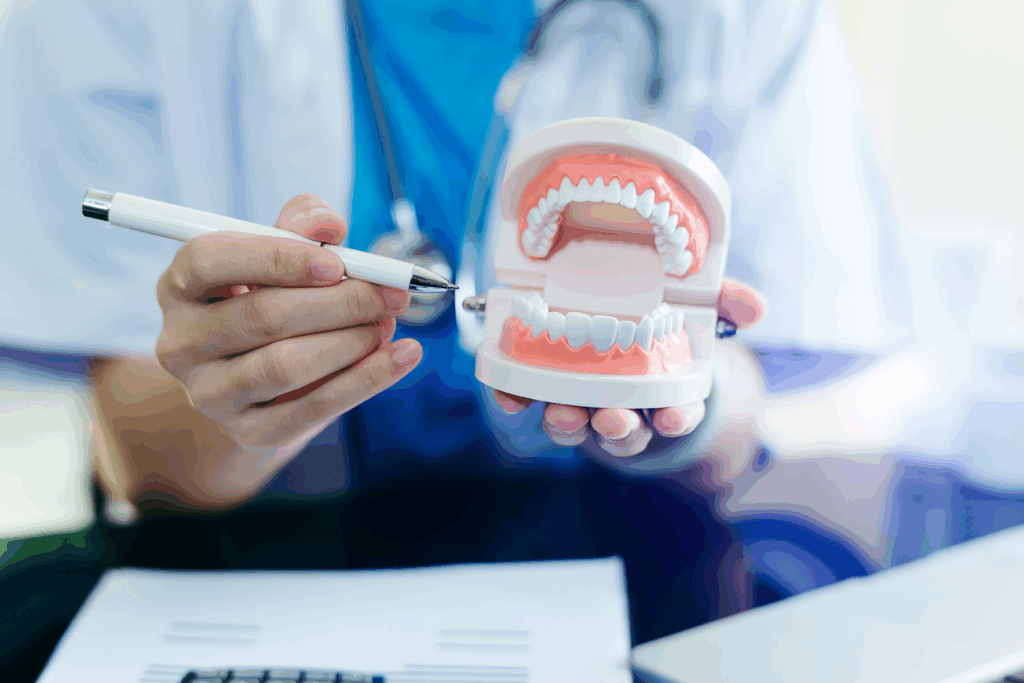
All three replace missing teeth, but they go about it very differently. There’s no single right answer. It depends on the health of the neighbouring supports, your bone, your budget and your timeline. We’ll set out the options side by side and let you decide.
| Option | Fixed or removable | Affects neighbouring teeth? | Typical timeframe | Things to weigh up |
|---|---|---|---|---|
| Bridge | Fixed | Yes, usually shaped for crowns | 2 to 3 visits | Feels natural, needs special cleaning under the pontic |
| Implant | Fixed | No | Several months, as the implant bonds with bone | Protects neighbours, needs enough healthy bone |
| Partial denture | Removable | Minimal | A few visits | Usually lowest upfront cost, comes out for cleaning |
Comparing these options is a normal part of restorative dentistry. Your dentist can explain the differences in cost, timeframe, maintenance and the dental services involved with each approach.
If you are travelling from Victoria Point or elsewhere along the Queensland coast, you can book a dental consultation specifically to compare the options before choosing a treatment.
Rebates, Payment Plans, and Staging the Work
Bridges usually fall under major dental on extras policies, so your rebate depends on your level of cover. Ask us for the item numbers on your treatment plan and your fund can tell you exactly what you’ll get back. We’re a preferred provider for CBHS, Australian Unity, HCF, Medibank and Bupa, and we claim on the spot with HICAPS.
If you need several things done, staging the work can help. For example, fixing decay or gum issues in one period and fitting the bridge in the next can spread the cost across two lots of extras limits. You’ll get the full estimate upfront, and we’re happy to help you work out the order. Three payment plan options, including AfterPay and Zip Pay, plus SuperCare can also take the sting out of a bigger job.
| Option | How it works |
|---|---|
| Health fund | Preferred provider for CBHS, Australian Unity, HCF, Medibank and Bupa, with claims on the spot through HICAPS |
| Staging the work | Fixing decay or gum issues in one period and fitting the bridge in the next can spread the cost across two lots of extras limits |
| Payment plans | Three payment plan options, including AfterPay and Zip Pay |
| SuperCare | A superannuation-based option for funding dental treatment |





People travelling from Victoria Point and other QLD communities can ask for the relevant dental item numbers before proceeding. Your dentist can provide an estimate so you can check your likely rebate before starting treatment.
If several dental services are required, the work can sometimes be staged. Your dentist will explain which parts need to happen first and how the overall care can be organised.
Talk to Us About a Bridge From Redland Bay
Alexandra Hills Dental welcomes people from Redland Bay, Victoria Point, the Redland Coast and surrounding coastal QLD areas.
Our practice is accessible from Redland Bay Road and the surrounding road network. For people travelling from Victoria Point, Redland Bay Road provides a straightforward route towards Alexandra Hills. Nearby coastal communities are also connected through the local road network.
If you are considering a bridge, you can book a dental assessment with our team. Your dentist can discuss function, maintenance, cost, and any cosmetic considerations before you choose a treatment.
- Let us see the gapWe check the neighbouring teeth and take an X-ray.
- Lay out the choicesBridge, implant or partial denture, side by side with costs.
- Fit and maintainTwo or three visits, then a hands-on lesson in cleaning under it.
Already have a bridge that’s getting on a bit? It’s worth a check even if nothing hurts, because decay under a bridge rarely announces itself until it’s well along. A quick look and an X-ray will tell us whether it has years left in it or needs planning for.
And if someone has told you a bridge is your only option, or the only option worth considering, getting a second opinion costs very little. Call 07 3824 4488, or book online when it suits you.
We’re in Alexandra Hills, an easy run up Redland Bay Road.
If sudden severe pain, swelling or significant damage develops around a bridge, let us know that it may be an emergency. Our emergency dental services can assess the problem, and your dentist can determine whether immediate care or further treatment is required.
For people travelling from Victoria Point, the Redland Coast or another coastal QLD suburb, Alexandra Hills is connected through Redland Bay Road and the surrounding road network.
If appearance is also a concern, your dentist can discuss the cosmetic side of bridge treatment, including shade and shape. These cosmetic considerations can be incorporated into the overall dental plan without losing sight of strength and function.
Whether you need routine bridge services, a second opinion, or emergency dental care, book an assessment so your dentist can see the area and explain the appropriate treatment.
Any surgical or invasive procedure carries risks. Before proceeding, you should seek a second opinion from an appropriately qualified health practitioner.
Dental Bridges Redland Bay: Frequently Asked Questions
What is a dental bridge?
A bridge replaces one or more missing teeth with a false tooth, called a pontic, held in place by dental crowns on either side. Because it's fixed, nothing comes out at night.
What types of dental bridges are there?
Four main designs: a traditional fixed bridge, a cantilever bridge anchored on one side, a resin-bonded (Maryland) bridge, and an implant-supported bridge for larger gaps.
How many visits does a bridge take?
Usually two or three. The abutments are shaped and an impression is sent to the lab, a temporary bridge goes in, then the permanent bridge is fitted and cemented.
How do I clean under a bridge?
Normal floss won't pass between joined teeth, so clean under the pontic daily with superfloss or a floss threader, use interdental brushes beside the abutments, and consider a water flosser.
How long does a dental bridge last?
Well looked after, bridges typically last between 10 and 15 years.
Is a bridge, implant or partial denture better?
There's no single right answer. It depends on the health of the neighbouring teeth, your bone, your budget and your timeline, and we'll set out the options side by side.
Can I claim a bridge on my health fund?
Bridges usually fall under major dental on extras policies. Ask us for the item numbers on your treatment plan, and your fund can tell you exactly what you'll get back.
How far are you from Redland Bay?
We're in Alexandra Hills, an easy run up Redland Bay Road from Redland Bay and Victoria Point.