Rebuilding a Broken Tooth With a Crown
A dental crown is a custom-made cap that covers the entire visible part of a cracked, worn, or heavily filled tooth, and at Alexandra Hills Dental in QLD, it’s made in an Australian lab and fitted over two visits. Most people start thinking about crowns the moment a filling or a corner of a tooth comes away mid-meal, and their tongue finds a sharp edge that wasn’t there at lunch. The first worry is usually cost. The second is whether a crown is really needed, or just the expensive option. Both have straightforward answers.
Our principal dentist likes to describe a crown as a motorcycle helmet for your tooth. It wraps around the outside and protects what’s underneath from the forces that would otherwise split it.
For people in Redland Bay, QLD, and the wider Redland area, crowns are a common part of restorative dentistry when a damaged tooth needs more protection than a filling can provide. At Alexandra Hills Dental, your dentist will explain whether a crown is appropriate, whether another dental option may be enough, and how it fits with your overall oral health. If you are travelling from Redland Bay, you can contact our dental team to book an assessment with one of our dentists.
Our general dental services include assessment of damaged, cracked, and heavily filled teeth, along with preventive and restorative care. Every crown treatment begins with checking the health of the tooth and the surrounding gum so that patients understand what is happening before deciding whether to proceed.
The Point Where Filling After Filling Stops Working
Here’s something most people don’t realise: every time a tooth gets a bigger filling, it gets weaker, even if the filling itself is perfect. A filling replaces missing tooth, but it doesn’t hold the walls of the tooth together the way natural structure does.
The research backs this up. A study by Larson and colleagues, published in Operative Dentistry in 1981, found that preparing a cavity one-third of the width between a tooth’s cusps reduced its resistance to fracture by more than 50%. Geurtsen and colleagues, writing in Quintessence International in 2003, reported that fracture risk rose substantially as fillings approached half that width, and recommended fillings stay within roughly a third to a quarter of it.
So when a tooth is mostly filling, adding more filling isn’t really fixing it. A crown covers and braces the remaining tooth instead. Depending on how a tooth has cracked, it can sometimes be saved without major consequences, but the outlook drops once a cracked tooth is painful, and a tooth that has split in half can only be removed. Catching it early matters.
That is one reason dentists may recommend a crown before a weakened tooth fractures further. A crown can form part of a broader dental care plan designed to protect the remaining tooth structure and support long-term oral health. Good dentistry is not simply about placing the largest restoration available. Your dentist should first consider how much healthy tooth remains and whether a filling, onlay or crown is the most suitable treatment.
For some patients, the best option is a filling. For others, an onlay or crown provides the support the tooth needs. These restorative treatments form part of our general dental services, with the recommendation based on the condition of the tooth rather than a one-size-fits-all approach.
Grinding, Clenching, and Worn-Down Teeth
Grinding and clenching, often at night, put enormous repeated force on teeth. Over the years, this can flatten the biting surfaces, chip edges, and create fine cracks. Plenty of people don’t know they grind until a partner mentions it or a dentist spots the wear.
Crowns can rebuild heavily worn teeth, but if grinding is the cause, we also need to protect your work. That usually means a custom night guard, so the habit that damaged your teeth doesn’t damage your new crowns.
What years of grinding can do
- Flatten the biting surfaces
- Chip edges
- Create fine cracks
If grinding is the cause, a custom night guard protects your new crowns.
This type of wear can affect both the strength of the teeth and the appearance of your smile. During a dental examination, our dentists can look for the tell-tale signs of grinding and explain whether restorative dentistry, a night guard, or another approach makes sense.
For patients who have worn several teeth down, the discussion may involve more than one treatment. Protecting the long-term health of the teeth, restoring function, and maintaining a natural-looking smile all need to be considered together.
Choosing Between All-Ceramic, Porcelain, and Gold
There are three main crown materials, and each has its place. All the crowns we provide are made in Australia, and the materials used are approved by the Therapeutic Goods Administration (TGA). We’ll recommend a material based on where the tooth sits, how you bite, and what matters most to you, then let you make the call.

| Material | Appearance | Typical strengths | Often used for |
|---|---|---|---|
| All-porcelain (ceramic) | Tooth-coloured, natural translucency | Best looks, no metal | Front teeth and visible areas |
| Porcelain fused to metal | Tooth-coloured with a metal layer underneath | Strength plus a natural look | Back teeth where appearance still matters |
| Full metal (gold or silver-coloured alloy) | Metallic | Very durable, kind to the opposite teeth | Back molars and heavy grinders |
There is no single crown material that every dentist should use for every tooth. Modern dentistry gives dentists several options, and the right choice depends on where the tooth sits, the amount of biting force it takes, and how visible it is when you smile. Your dental appointment is where those practical and cosmetic considerations can be discussed before anything is made.
Some patients place more importance on durability, while others are particularly concerned about how a crown will look in their smile. Crown treatment can therefore overlap with cosmetic dentistry, particularly when the tooth is visible when talking or smiling.
Getting the Shade Right the First Time
A crown that’s a shade too white looks like a crown. We match colour in natural light, compare against the teeth on either side, and pass detailed shade information to the lab. If you’re planning teeth whitening, do it before your crown is made. Crowns don’t change colour with whitening, so we match the crown to your final shade, not your current one.
How we match the shade
- Colour matched in natural light
- Compared against the teeth on either side
- Detailed shade information passed to the lab
- Any whitening done first, so we match your final shade
This is particularly important when a crown is being placed somewhere visible in your smile. Cosmetic dentistry is not necessarily about making a tooth as white as possible. The aim is usually to make the dental restoration blend naturally with the teeth around it. If you are considering whitening or other cosmetic dentistry work, tell your dentist before the crown is made.
Our cosmetic services can also be discussed alongside crown treatment where appropriate. This helps patients understand how whitening or other cosmetic treatments may affect shade selection and the finished appearance of their smile.
Two Visits: Preparation Then Fitting
- First visit: preparationWe numb the area with local anaesthetic, then carefully reshape the tooth so the crown has room to sit flush with your bite. An impression or scan is sent to the Australian lab that makes your crown.
- In betweenYou leave with a temporary crown protecting the tooth.
- Second visit: fittingThe temporary comes off, and we check the fit, colour and bite of the permanent crown before bonding it into place with dental cement.

At your first appointment, we numb the area with local anaesthetic, then carefully reshape the tooth so the crown has room to sit flush with your bite. An impression or scan is taken and sent to the Australian lab that makes your crown. You’ll leave with a temporary crown protecting the tooth.
At your second visit, the temporary comes off, and we check the fit, colour and bite of the permanent crown before bonding it into place with dental cement.
After your crown is fitted
- Numbness can linger for a couple of hours, so take care with hot drinks and don't chew your cheek
- Avoid hard or sticky foods for 24 hours while the cement sets
- Mild sensitivity to hot and cold is common and usually settles within a few days
- Your bite should feel even, not high. If one tooth hits first, call us and we'll adjust it
After fitting, numbness from the anaesthetic can linger for a couple of hours, so take care with hot drinks and don’t chew your cheek. Avoid hard or sticky foods for 24 hours while the cement sets. Mild sensitivity to hot and cold is common and usually settles within a few days. Your bite should feel even, not high. If one tooth hits first when you close, call us, and we’ll adjust it, because a high crown can make the tooth sore and put extra load on it.
Some clinics in the Redlands offer same-day crowns milled on site. We use a lab-made, two-visit process, and we’re upfront about that so you can choose what suits you.
If you are coming from Redland Bay, QLD, it can help to organise both dental visits in advance. Our dentists can explain what happens at each stage of treatment so you know why two appointments are required. Alexandra Hills Dental also provides broader general dentistry services for adults and children.
For patients balancing work, family and other commitments, planning both appointments together can make crown treatment easier to manage. If you need help finding suitable times, contact our team and ask about available appointments.
Looking After the Temporary in Between
Temporary crowns are designed to come off easily, so treat them gently. Chew on the other side where you can, avoid sticky lollies and chewing gum, and slide floss out sideways rather than pulling it up. If the temporary comes loose, call us on 07 3824 4488 and we’ll recement it. Don’t leave the tooth uncovered for long, as it can shift or become sensitive.
Treat your temporary gently
- Chew on the other side where you can
- Avoid sticky lollies and chewing gum
- Slide floss out sideways rather than pulling it up
- Call us if it comes loose
If you are worried about the temporary crown between visits, contact the practice. Your dentist can check whether it needs to be recemented or whether the tooth requires any other dental attention before your permanent crown is fitted.
Maintaining good oral health during this stage is important. Follow the instructions given after your first appointment and contact us if something does not feel right.
When a Crown Follows Root Canal Therapy
A tooth that has had root canal treatment has often lost a lot of structure and can become more brittle, which is why a crown is frequently recommended afterwards, especially on back teeth. A 2010 systematic review by Ng and colleagues in the International Endodontic Journal found that placing a crown after root canal treatment was the factor most strongly linked to the tooth surviving long term.
In restorative dentistry, the aim after root canal therapy is generally to preserve as much useful tooth structure as possible while protecting the tooth from further damage. Your dentist can assess how much structure remains and explain why a crown may be recommended as the next stage of dental care.
Root canal therapy and crowns are separate treatments, but they are often connected. For patients who have already completed root canal treatment, protecting the weakened tooth can become the next priority for maintaining long-term dental health.
What Shortens a Crown’s Life
The crown material itself won’t decay, but the natural tooth underneath still can, and that’s usually where problems start. Watch out for:
What shortens a crown's life
- Gaps in brushing and flossing around the crown margin, where bacteria creep in
- Grinding or clenching without a night guard
- Chewing ice, pen lids, or fingernails
- Sticky lollies and caramels pulling at the edge
- Gum recession exposing the margin over time
- Skipping regular check-ups, so small issues get missed
If your crown ever feels loose, sensitive, or sits oddly when you bite, don’t wait. Ring us, and we’ll have a look before a small issue turns into a bigger one.
Regular dental examinations are important even when a crown feels completely normal. Your dentist can examine the crown margin, the surrounding gum, and the way your teeth meet. This is part of routine preventive dentistry and helps our dentists identify small changes before they turn into larger dental problems.
Preventive care is one of the general services that supports the long-term health of both crowned and natural teeth. Regular visits also give patients a chance to raise concerns about their bite, gums, or smile before those concerns become more difficult to manage.
Rebates, Item Numbers, and the Real Out-of-Pocket
Will your health fund cover any of this, and how much is the gap? It depends on your level of extras cover, because crowns usually fall under major dental. The quickest way to get a real answer is to ask us for the item numbers on your treatment plan. Crown items in the Australian Schedule of Dental Services include 613 (non-metallic), 615 (veneered, such as porcelain fused to metal) and 618 (metallic). Give those to your fund, and they’ll tell you what you’ll get back.
| Item number | Crown type |
|---|---|
| 613 | Non-metallic |
| 615 | Veneered, such as porcelain fused to metal |
| 618 | Metallic |
If you’re with CBHS, Australian Unity, HCF, Medibank or Bupa, we’re a preferred provider, which can mean a smaller gap, and the claim goes through HICAPS before you leave. Either way, the price is on paper before the drill comes out, not after. Spreading the cost is possible too, with three payment plan options, including AfterPay and Zip Pay, plus SuperCare.
| Option | How it works |
|---|---|
| Health fund | Preferred provider for CBHS, Australian Unity, HCF, Medibank and Bupa, with claims through HICAPS before you leave |
| Payment plans | Three payment plan options, including AfterPay and Zip Pay |
| SuperCare | A superannuation-based option for funding dental treatment |





If you are travelling from Redland Bay, ask our dental team for the relevant item numbers before your appointment if you want to check your rebate first. Health fund arrangements can vary between services and treatments, so having the item number gives you something specific to discuss with your fund before you book.
If you have questions about the estimated cost, payment options, or what is included in your treatment, contact our team before your appointment. We want patients to understand the proposed costs before proceeding.
Crowns Versus Onlays and Large Fillings
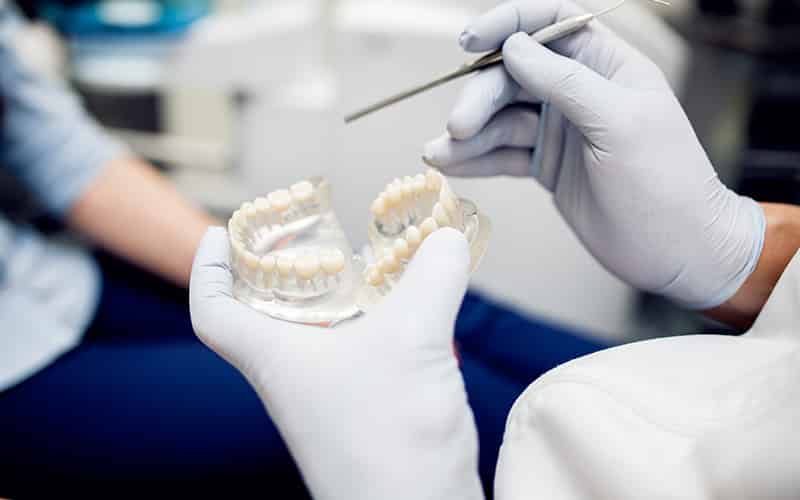
A crown isn’t always the answer. If the damage is small, a filling is simpler and cheaper. In between sits the onlay, sometimes called a partial crown, which covers only the cusps that need protecting and keeps more natural tooth. Whether a filling, an onlay or a full crown suits your tooth depends on how much is left and how you bite, and we’ll walk you through the trade-offs rather than defaulting to the biggest job. If a filling will do, you’ll hear that from us.
| Option | What it does | When it suits |
|---|---|---|
| Filling | Replaces missing tooth | Small damage, and simpler and cheaper |
| Onlay (partial crown) | Covers only the cusps that need protecting, keeping more natural tooth | In between a filling and a crown |
| Full crown | Covers and braces the entire visible part of the tooth | A tooth that is mostly filling, cracked or heavily worn |
That choice is an important part of conservative dentistry. Your dentist considers how much of a healthy tooth can be kept rather than automatically recommending the most extensive dental option. Different dentists may describe fillings, onlays and crowns differently, but the basic question is the same: how much support does the damaged tooth need?
These are all examples of restorative treatments that can form part of general dental care. Some also have a cosmetic element when the repaired tooth is visible in your smile. The right treatment depends on the health and strength of the remaining tooth.
For someone in Redland Bay, QLD, an assessment gives the dentist a chance to examine the tooth directly and explain which option is appropriate before you commit to further dental work.
Arrange a Crown Assessment From Redland Bay
If you live in Redland Bay, QLD, or elsewhere in the Redland area, you can book a crown assessment with Alexandra Hills Dental to find out whether a filling, onlay or crown is appropriate. Our dentists provide general dentistry, restorative dentistry and cosmetic dentistry, along with broader dental care for adults and children.
Our services are not limited to crowns. General services include routine check-ups and preventive dental care, while restorative treatments can help repair damaged teeth. Cosmetic services can also be discussed when the appearance of the teeth or smile is part of your concern.
Families from Redland Bay can also use the practice for routine dental check-ups and preventive dentistry. While crowns are generally associated with adult teeth, introducing children to regular visits with a dentist can help them become comfortable with dental care and establish good habits early.
- Show us the toothCall 07 3824 4488. If it's broken and sore, ring before 10 am for a same-day spot.
- Weigh it upFilling, onlay or crown, with item numbers and the price in writing.
- Prep, then fitThe first visit shapes the tooth; the second fits your permanent crown.
Coming in from Redland Bay for a two-visit crown? Book both appointments before you leave the first one, so the lab time and your diary line up. Thursday evening appointments run until 8 pm, which means neither visit has to cost you a day off.
Already have a crown from somewhere else that’s been giving you grief? Bring it in. We’re happy to take a look and give you a second opinion, even if you end up having the work done elsewhere.
For people looking for a dentist near Redland Bay, our Alexandra Hills location provides access to a range of dental and dentistry services without limiting your appointment to the crown itself. Our dentists can assess the rest of your teeth and gums, discuss any other dental concerns, and help you plan ongoing care for your oral health.
We also welcome families from across Redland Bay, QLD, and neighbouring parts of the Redland area. General dentistry for adults and children can include routine examinations, preventive care and advice about maintaining healthy teeth between dental visits.
For patients interested in the appearance of their teeth as well as their dental health, our team can also discuss appropriate cosmetic treatments and cosmetic services. Where a crown is visible in the smile, considerations such as shape and shade can form part of the planning process.
Whether you need a crown, are worried about a broken tooth or simply want another dentist to assess existing dental work, you are welcome to book with Alexandra Hills Dental. For those travelling from Redland Bay, our dentists can explain the options clearly before any dental work goes ahead.
To ask about crown treatment, other available treatments, general services, cosmetic services, appointment times or costs, contact Alexandra Hills Dental. Our team can help Redland Bay patients understand the next step and arrange an appointment that suits them.
Any surgical or invasive procedure carries risks. Before proceeding, you should seek a second opinion from an appropriately qualified health practitioner.
Dental Crowns Redland Bay: Frequently Asked Questions
How many visits does a dental crown take?
Two. The first visit shapes the tooth and takes an impression or scan for the Australian lab, with a temporary crown fitted. The second visit fits and bonds your permanent crown.
Do you offer same-day crowns?
No. We use a lab-made, two-visit process, and we're upfront about that so you can choose what suits you.
What crown materials do you offer?
All-porcelain (ceramic), porcelain fused to metal, and full metal (gold or silver-coloured alloy). All our crowns are made in Australia with TGA-approved materials.
Should I whiten my teeth before getting a crown?
Yes, if you're planning whitening. Crowns don't change colour with whitening, so we match the crown to your final shade.
Do I need a crown after root canal treatment?
Often, especially on back teeth. A treated tooth can become more brittle, and a crown is the factor most strongly linked to the tooth surviving long term.
What item numbers will my health fund see?
Crown items include 613 (non-metallic), 615 (veneered, such as porcelain fused to metal) and 618 (metallic). Give these to your fund to find out your rebate.
Is a crown always necessary?
No. If the damage is small, a filling is simpler and cheaper, and an onlay can cover only the cusps that need protecting. If a filling will do, you'll hear that from us.
How far are you from Redland Bay?
We're at Shop 2/191 Vienna Rd, Alexandra Hills, with Thursday evening appointments until 8 pm so neither visit has to cost you a day off.