Dental Implants Capalaba
Replacing Missing Teeth for Capalaba Patients
A missing tooth affects a lot more than how your smile looks. At Alexandra Hills Dental, we offer dental implants, dental bridges, and dentures, and before recommending any of the three options, we look properly at your medical history and previous dental treatment so the recommendation fits your mouth, not just the most common option. If you’re in Capalaba, contact our team at Alexandra Hills Dental and book an appointment today!
What a Gap Does to the Teeth Around It
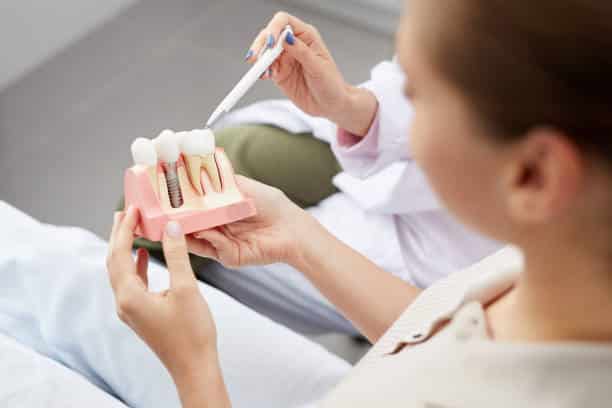
Chewing and speech both shift once a tooth is missing, and teeth on either side of the gap tend to lean and drift towards the empty space over time. Left long enough, that drift can throw out your bite and lead to jaw strain, headaches, and neck pain that people rarely connect back to a single missing tooth.
A dental implant is one way to stop that drift before it starts affecting your bite, since it fills the space and gives neighbouring teeth something to hold their position against. Alexandra Hills Dental treats this as part of general dentistry rather than a separate specialty, so the same dentist who spots the gap during a dental check-up can also talk you through dental implant treatment and what it involves.
What a missing tooth can lead to
- Changes to chewing and speech
- Neighbouring teeth leaning and drifting into the space
- A bite that is thrown out of line
- Jaw strain, headaches and neck pain
Health fund members should ask about preferred provider cover before committing to dental implants, since it varies by policy, and payment options are available if a gap in cover means paying some or all of the cost yourself. It’s worth raising this at the same dental appointment as other cosmetic questions, including veneers, since drifting teeth can affect the evenness of a smile as much as the bite itself.
If a missing tooth has been left for a while, it’s worth having a dentist assess whether dental implants or another treatment is the better fit for your teeth now, rather than waiting for jaw strain or headaches to prompt the visit. Alexandra Hills Dental offers a full range of dental services covering general dentistry, dental implants, and veneers, so book an appointment or contact our practice to ask what applies to your situation before deciding on a dental treatment.
Bone Loss, Bite Changes, and Facial Shape
The jawbone under a missing tooth stops getting the stimulation chewing normally provides, so it gradually resorbs. Given enough time, that can affect the opposing tooth, change your bite, and even reduce the support your cheeks and lips get from the jaw underneath.
Working out how much bone loss has already happened isn’t something you can judge yourself, which is why an assessment with a dentist usually starts with a look at the jaw itself rather than just the visible gap.
- The tooth is lostThe jawbone underneath stops getting the stimulation chewing normally provides.
- The bone resorbsWithout that stimulation, the bone gradually shrinks away.
- The bite changesGiven enough time, the opposing tooth can be affected and your bite can shift.
- Facial support dropsThe jaw can give less support to your cheeks and lips.
Alexandra Hills Dental folds this into our general dentistry appointments, so dental implants are discussed alongside the wider picture of your dental health rather than treated as a standalone decision.
Cosmetic changes to the smile, such as thinner lip support or a shifted bite, are often raised in the same conversation as veneers, since both dental implants and veneers fall under the practice’s services and can be planned together where relevant. Health fund members should confirm what’s covered before proceeding, and payment options remain available for costs outside that cover.
Patients in Capalaba dealing with a long-standing gap are encouraged not to wait until the bite has shifted noticeably. Book a consultation or contact our dental team directly to find out what’s realistic for your jaw now, before more bone is lost to work with.
Your Three Main Options Side by Side
| Option | Involves surgery | Relies on neighbouring teeth | Typical lifespan |
|---|---|---|---|
| Dental implant | Yes | No | 20 years or more with care |
| Dental bridge | No | Yes | 10 to 15 years |
| Denture (partial or full) | No | No, though may use them for retention | 5 to 10 years, with adjustments |
The table gives a straightforward comparison, but which option actually suits you depends on details it can’t show, like how much natural tooth structure remains or whether your jawbone can support dental implants without additional treatment first. That’s something only a dentist can properly assess.
Every dentist at Alexandra Hills Dental works through these factors during a general dental appointment, looking at your dental history alongside the numbers above before landing on a recommendation. Patients often assume dental implants are automatically the better choice for their smile, but a dental bridge or denture can still be the right call depending on age, health, and how many teeth are missing.
For anyone in Capalaba weighing this up, cost is rarely as simple as the table suggests either. Health fund benefits and payment options vary across all three dental services, so getting a personalised figure matters more than comparing list prices. Contact our practice directly, and a dentist can talk through dental implants, dental bridges, veneers, and dentures against your specific situation rather than the general averages shown here.
Dental Implants: The Closest Thing to a Real Tooth
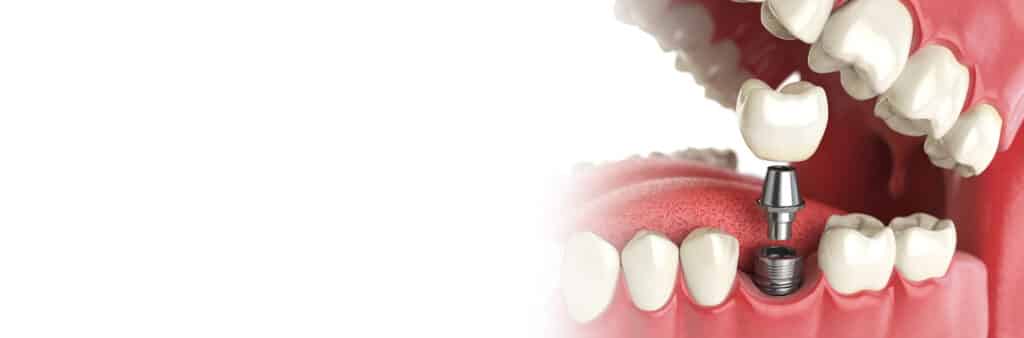
A dental implant involves placing a small titanium post into the jawbone as an artificial tooth root. Over three to six months, it fuses with the bone through a process called osseointegration, and a custom dental crown is fitted on top once that healing is complete. Because it does not rely on neighbouring teeth, nothing else in your mouth needs to be touched.
- The titanium post is placedA small titanium post goes into the jawbone as an artificial tooth root.
- Three to six months of healingThe post fuses with the bone through a process called osseointegration, with time built in before any weight goes on it.
- The crown is fittedA custom dental crown, matched to your other teeth, is fitted on top once healing is complete.
Titanium is what sets a dental implant apart from other replacement options, fusing with bone in a way most materials can’t manage. That’s also why the process takes months rather than a single visit, with time built in for that fusion to properly take hold before any weight goes on it.
The dental crown fitted afterwards is matched to your other teeth, so an implant can look and function much like the tooth it’s replacing rather than an obvious add-on. Some health factors, such as smoking or uncontrolled diabetes, can slow healing during that fusion period, which is why a dentist will usually ask about these before treatment starts rather than partway through.
Implant treatment sits alongside other dentistry services worth discussing if you’re missing a tooth, since the staged nature of the process means it suits some situations better than a quicker fix might. Not every practice offering general dentistry treats implants as a standard part of their services, so it’s worth checking this is something handled in-house before assuming timelines. A dentist can outline realistic timeframes for your case, including how your own health history might shape the schedule from post to finished crown.
Bridges When an Implant Is Not the Right Fit
If surgery is not something you want, or there is not enough bone without a graft, a bridge is often the more practical route, anchoring a false tooth to crowns on the teeth either side of the gap instead.
| Dental implant | Dental bridge | |
|---|---|---|
| Surgery | Yes | No |
| Bone-fusion stage | Yes, three to six months | No, so recovery is far more straightforward |
| Relies on the teeth either side | No | Yes, both anchor teeth need to stay strong |
| If an anchor tooth fails | Not affected | The whole bridge is affected |
| Not enough bone | May need a bone graft first | Often the more practical route |
A dental bridge doesn’t ask as much of your overall health as implant treatment does, since there’s no bone-fusion stage to get through and recovery is far more straightforward. That makes it a sensible option in dentistry when someone would rather skip surgery altogether, or when a bone graft would be needed before implants could even be considered.
The trade-off is that a dental bridge depends on the two anchor teeth staying strong for as long as the bridge does. If either of those teeth develops decay or fails down the track, the whole bridge is affected, which isn’t a risk dental implants carry since they don’t rely on neighbouring teeth at all.
It’s also worth knowing that choosing a dental bridge now doesn’t rule out implants later, though switching between the two isn’t always simple once crowns have been placed. A dentist can walk through how a bridge compares to implants for your specific gap, and what that might mean if you reconsider implants further down the track. Reach out to our team and book an appointment!
Full and Partial Dentures Explained
Dentures remain a solid, cost-effective option, particularly where several teeth need replacing at once. A partial denture fills specific gaps, full dentures replace an entire arch, and both are fitted carefully to your gums, jawbone, and any remaining natural teeth so they sit securely.
| Partial denture | Full denture | |
|---|---|---|
| What it replaces | Specific gaps | An entire arch |
| Fitted to | Your gums, jawbone and remaining natural teeth | Your gums and jawbone |
| Ongoing care | Regular check-ins and relines as your gums change | Regular check-ins and relines as your gums change |
Fit tends to be the biggest adjustment with dentures, since gums and jawbone shape shift gradually and a denture that felt snug at first can loosen months later. Regular check-ins allow for relines rather than living with slippage, which is a normal part of owning dentures rather than a sign something’s gone wrong.
Some patients start with a denture and later look at an implant to anchor it more securely, particularly with lower full dentures where stability can be harder to achieve. Others go the other way, choosing an implant first and only considering dentures if more teeth are lost later on. Neither path is wrong, but it helps to know both exist before committing to one.
Cost and simplicity are usually why dentures remain popular among the services offered for missing teeth, especially when several need replacing together. Whether a denture alone or a denture paired with an implant suits you better depends on jaw structure and how many teeth are involved, so it’s worth having that properly assessed through the relevant dental services rather than assuming one path fits all. If you’re in Capalaba, get in touch with our team today!
Replacing One Tooth Versus Several
A single missing tooth is usually best handled with an implant or a bridge. Multiple missing teeth open up more options, from a partial denture to a longer bridge, right through to full-arch implant-supported solutions in more extensive cases.
| How many teeth | Usual options |
|---|---|
| One missing tooth | A dental implant or a dental bridge |
| Several missing teeth | A partial denture or a longer bridge |
| More extensive cases | Full-arch implant-supported solutions |
Eating, Smiling, and Speaking With Confidence Again
Beyond function, filling a gap tends to restore confidence around smiling and talking, and it removes a self-consciousness that patients often do not mention until it is gone. Chewing function and pronunciation both tend to improve too, more than most people expect.
Missing a Tooth for Years? It Is Not Too Late
Even a gap that has been there for years, or decades, is worth having assessed. There may be more bone loss to work around, but that does not automatically rule out an implant, bridge or denture.

What Each Option Costs and How Funds Contribute
Cost depends on which option suits your situation and how many teeth are involved. We are a preferred provider for CBHS, Australian Unity, HCF, Medibank and Bupa, with HICAPS claims processed on the spot, and three payment plan options plus SuperCare help spread larger treatment plans.
| Option | How it works |
|---|---|
| Health fund | Preferred provider for CBHS, Australian Unity, HCF, Medibank and Bupa, with claims processed on the spot through HICAPS |
| Payment plans | Three payment plan options, including AfterPay and Zip Pay, so you can spread the cost of treatment |
| SuperCare | A superannuation-based option for funding dental treatment |





See our payment plans page for details on each option.
Dental Implants Capalaba: Frequently Asked Questions
What is a dental implant?
A small titanium post placed into the jawbone as an artificial tooth root. It fuses with the bone over three to six months, and a custom dental crown is fitted on top once healing is complete.
How long do dental implants last?
Typically 20 years or more with care.
Is an implant better than a bridge or denture?
Not automatically. A dental bridge or denture can still be the right call depending on age, health, how many teeth are missing, and whether your jawbone can support an implant.
What if I do not have enough bone for an implant?
A bone graft may be needed first, or a bridge is often the more practical route.
Can health factors affect implant treatment?
Yes. Smoking or uncontrolled diabetes can slow healing during the fusion period, so a dentist will ask about these before treatment starts.
I have been missing a tooth for years. Is it too late?
No. Even a gap that has been there for years is worth having assessed. There may be more bone loss to work around, but that does not automatically rule out an implant, bridge or denture.
How can I pay for dental implants?
We are a preferred provider for CBHS, Australian Unity, HCF, Medibank and Bupa with HICAPS claims on the spot, and three payment plan options plus SuperCare help spread larger treatment plans.
Where are you located?
Shop 2/191 Vienna Rd, Alexandra Hills, a short drive from Capalaba.
Book a Tooth Replacement Consultation Near Capalaba
Comfort and safety come first, from your initial consultation through to your last treatment session. Ring 07 3824 4488 to book an assessment at Shop 2/191 Vienna Rd, Alexandra Hills, a short drive from Capalaba. Late appointments run until 6 pm on Mondays and Wednesdays and until 8 pm on Thursdays, and we are open Saturday mornings until 1 pm.
| Day | Opening hours |
|---|---|
| Monday | 8:30 am to 6:00 pm |
| Tuesday | 8:30 am to 5:00 pm |
| Wednesday | 8:30 am to 6:00 pm |
| Thursday | 9:00 am to 8:00 pm |
| Friday | 8:30 am to 5:00 pm |
| Saturday | 8:30 am to 1:00 pm |
| Sunday | Closed |