Living With a Gap and What It Quietly Costs
A dental implant is a titanium post placed in the jawbone to act as a new tooth root, left to fuse with the bone for around three to six months, then topped with a custom dental crown. Often the decision starts with someone else’s result. A partner, a sister, children, or the neighbour two doors down finally gets their long-delayed tooth replaced, and you realise you’ve been chewing on one side for years and quietly avoiding big smiles. If you’ve decided it’s your turn, it’s worth knowing exactly what a dental implant involves, and when a bridge or denture would serve you better.
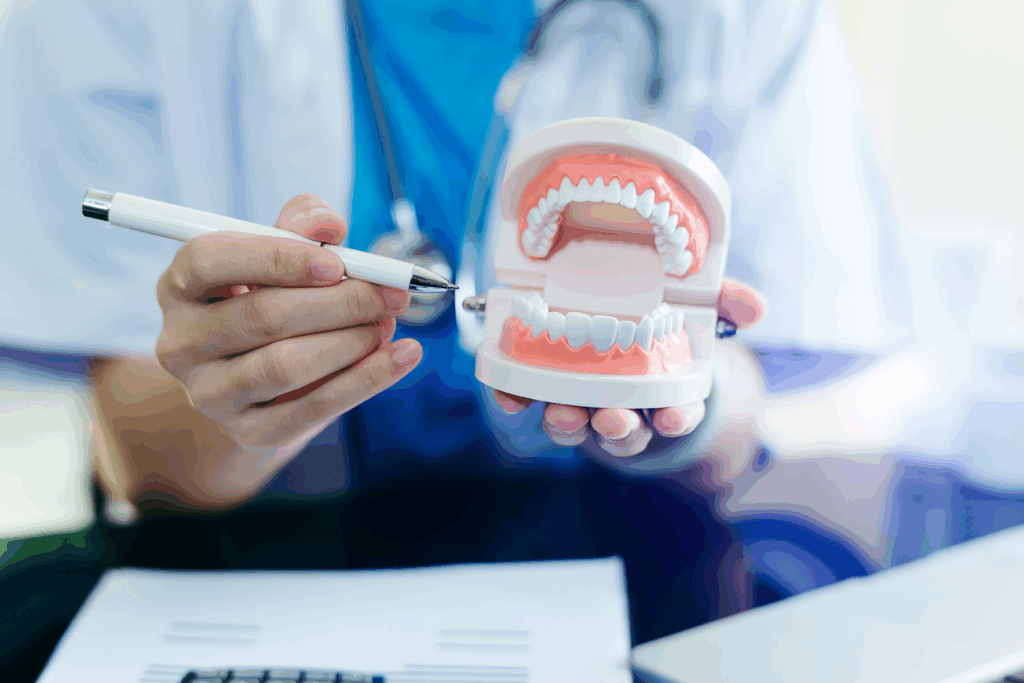
For people in Redland Bay, this first stage is usually about getting clear, practical advice. Alexandra Hills Dental also sees people from Victoria Point, the wider Redland area, and other communities around the bay. Our general dental services include assessing the gap, surrounding structures, and your bite before discussing the available treatment options.
Restorative dentistry looks at more than simply filling a space. Where appearance is important, cosmetic dentistry considerations can also form part of the planning. If you are ready to explore your dental treatment options, you can book a consultation with our dental team and discuss the next step with one of our dentists.
Shifting Teeth, Bite Collapse, and Jaw Bone Loss
The gap you can see is rarely the real cost of a missing tooth. What matters more is what happens around it over the next few years.
Meanwhile, the jawbone that used to hold the root starts to shrink because bone needs the stimulation of a tooth root to maintain itself. The longer a gap is left, the more bone can be lost, and that can make replacing the tooth later more complicated.
What happens around a gap
- Teeth tilt and drift towards the empty space
- The tooth opposite can over-erupt
- Your bite changes, food traps open up and cleaning gets harder
- With several back teeth missing, the bite can collapse
- Extra load on the front teeth, sometimes with jaw discomfort, headaches and neck pain
Teeth tend to tilt and drift towards an empty space. The tooth opposite can over-erupt because it has nothing to bite against. As teeth move, your bite changes, food traps open up, and dental cleaning gets harder. When several back teeth are missing, the bite can collapse, putting extra load on the front teeth and sometimes contributing to jaw discomfort, headaches, and neck pain.
This is one reason restorative dentistry considers what may happen around a gap over time, not just what it looks like today. Our dentists at Alexandra Hills Dental can assess those changes and explain whether doing something now may keep your future dental treatment options simpler.
People from Redland Bay, Victoria Point, and surrounding Redland suburbs can book a dental assessment even if the gap is not currently painful. The main point is to understand what is happening before deciding whether any treatment needs to be done.
For people travelling from Victoria Point, a consultation with a dentist can also help identify any broader oral health concerns that may affect the final recommendation.
Implants, Bridges, and Dentures Compared
There are three main ways to replace missing teeth, and each has a real place.
This comparison is a routine part of restorative dentistry. Different patients prioritise different things, including timeframe, cost, convenience, and appearance.
| Option | How it's held | Effect on other teeth | Typical timeframe | Worth knowing |
|---|---|---|---|---|
| Dental implant | Titanium post in the jawbone | Leaves neighbouring teeth alone | Several months, including healing | Needs enough healthy bone; usually the highest upfront cost |
| Fixed bridge | Crowns on the teeth either side | Neighbouring teeth are shaped for crowns | 2 to 3 visits | Faster; ideal if neighbours already need crowns |
| Partial or full denture | Rests on gums, clips to teeth (partial) | Minimal | A few visits | Removable; usually lowest upfront cost |
At Alexandra Hills Dental, our dentists can explain how the available dental services, from general to cosmetic and emergency, for adults and children, differ so you can compare them properly.
If pain, swelling, or another urgent problem is involved, an emergency assessment may need to come first. A dentist can deal with the immediate issue before the longer-term replacement options are discussed.
If closing the gap is also important for your smile, your cosmetic goals can be discussed alongside the practical side of the decision.
What a Dental Implant Actually Involves
Before anything else, we check your general health, your medical and dental history, and make sure your gums, jawbone, and remaining teeth are healthy. Gum disease, in particular, needs to be treated first because it affects how long any replacement lasts.
The implant itself is a titanium post placed into the jawbone where the tooth root used to be. Once it’s in, it’s left alone to fuse with the bone, a process called osseointegration. That bond is what makes an implant so stable.
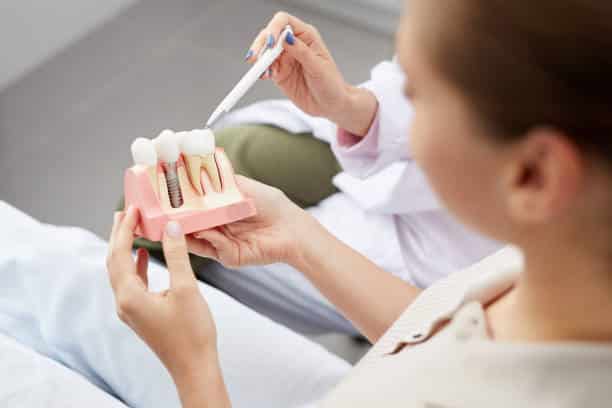
- Health checkWe check your general health, your medical and dental history, and treat any gum disease first.
- PlacementA titanium post is placed into the jawbone under local anaesthetic, so the area is numb throughout.
- HealingThe implant fuses with the bone over around three to six months. You may have a temporary replacement in the meantime.
- Abutment and crownOnce the implant has bonded, an abutment is attached and a custom crown is made to match your neighbouring teeth.
Placement is done under local anaesthetic, so the area is numb throughout. Afterwards, some swelling, tenderness, and minor bruising for a few days is common, and most patients manage with over-the-counter pain relief taken as directed. You’ll get written aftercare instructions from a dentist, including what to eat and how to keep the area clean, and we’ll check the site at a follow-up visit to make sure it’s healing as expected.
Follow-up with a dentist also gives us a chance to check gum health, healing and how the surrounding area is responding before the next stage begins.
Your dental examination may also identify other work that should be completed first. This is where broader dentistry services matter: the aim is to make sure the mouth provides a suitable foundation before proceeding.
Patients travelling from Redland Bay, Victoria Point, or elsewhere across the Redland area can book the required visits in stages rather than trying to organise everything at once.
Healing Time and the Final Crown
Integration typically takes around three to six months. During that time, you may have a temporary replacement so you’re not walking around with a gap. Once the implant has bonded, a connector called an abutment is attached, and a custom crown is made to match your neighbouring teeth.
It’s a longer process than a bridge, and we’ll be upfront about that. If you’ve got a wedding, a day out with your children in Victoria Point, or a milestone birthday eight weeks out, an implant won’t be finished by then, though we can talk about a temporary solution for the day.
This stage is particularly important when the missing area is visible. Cosmetic dentistry considerations such as shape, shade, and how the crown fits into your smile become part of the final planning.
If you have a deadline coming up, mention it when you book so a dentist from our team can explain what is realistic within the available timeframe.
When a Bridge Beats an Implant
Implants aren’t automatically the best answer. Well looked after, bridges typically last 10 to 15 years.
A bridge can be the smarter choice when
- The teeth on either side already have large fillings or need crowns anyway
- There isn't enough bone for an implant, and you'd rather avoid grafting
- Your health makes surgery less advisable
- You simply want it done faster
Balanced dentistry means comparing all suitable options rather than assuming one general approach is automatically better. Our dentists can explain when a bridge may be the simpler or more practical choice.
For people travelling from Victoria Point, Redland Bay, or elsewhere nearby, those comparisons can be covered during the same dental consultation.
This also applies to people coming from Victoria Point, where a dentist can compare the available options and explain how each one may affect long-term oral health.
Partial and Full Dentures Today
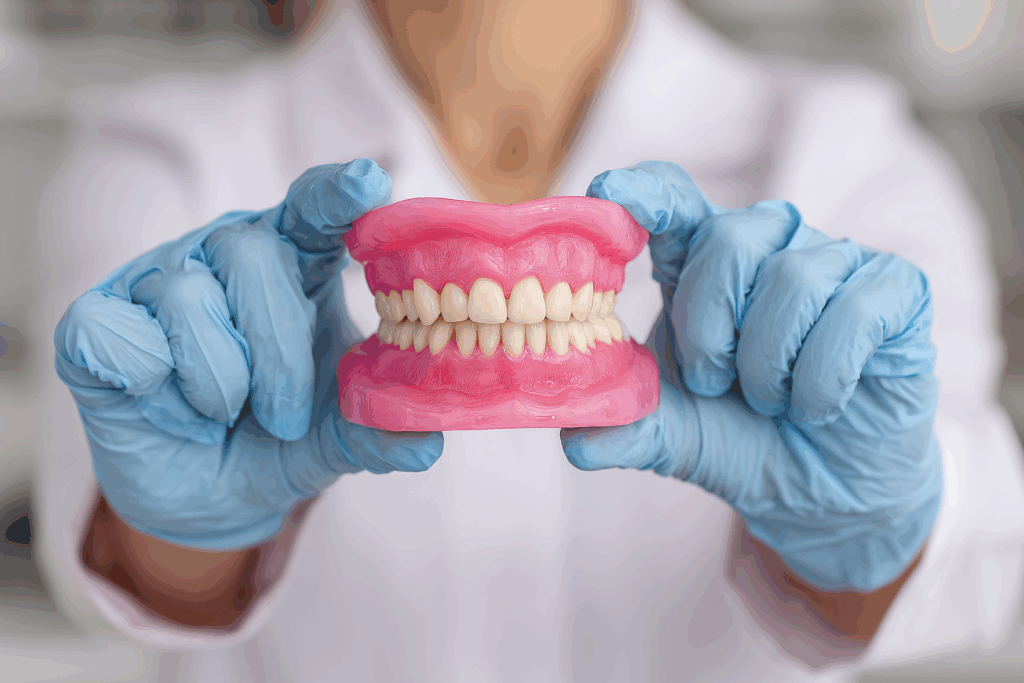
Dentures have come a long way. A partial denture fills one or more gaps and clips onto your remaining teeth, while a full denture replaces all the teeth in an arch. They’re removable for cleaning, usually the lowest upfront cost, and can be made relatively quickly.
| Option | What it is | Worth knowing |
|---|---|---|
| Partial denture | Fills one or more gaps and clips onto your remaining teeth | Removable for cleaning, usually the lowest upfront cost |
| Full denture | Replaces all the teeth in an arch | Doesn't stop bone shrinking, so may need relining or remaking. Lower full dentures can be hard to keep stable |
| Full-arch implant options | A set of implants supports a fixed row of teeth, often called All-on-4 or All-on-X | For people missing all their teeth in an arch. We'll talk through whether it suits you |
The trade-offs are real, though: dentures don’t stop bone shrinking underneath, so they may need relining or remaking over time, and some people find lower full dentures hard to keep stable. For people missing all their teeth in an arch, full-arch implant options exist, often referred to by names like All-on-4 or All-on-X, where a set of implants supports a fixed row of teeth. If that’s something you’re considering, a dentist from our team will talk you through whether it suits you and how we’d approach it.
Dentures remain an important part of restorative dentistry services, particularly where cost, timing, or surgery are concerns. Our dentists can compare removable and fixed options, so you know what each involves day-to-day.
If a denture is being considered because surgery is not suitable, your dentist can also explain the health considerations and how maintenance differs from a fixed option.
Replacing a Front Tooth Versus a Back Tooth
| Front tooth | Back tooth | |
|---|---|---|
| Main job | Appearance: gum shape, colour match, and how it looks when you smile and talk | Function: it takes heavy chewing forces |
| What matters most | Careful planning, as bone at the front can be thin | Strength and stability |
| Cosmetic considerations | Small differences in gum shape, colour or position can be noticeable | Less of a focus than for a front tooth |
Front and back teeth are different jobs. A front tooth is all about appearance: gum shape, colour match, and how it looks when you smile and talk. Bone at the front can be thin, so careful planning matters. A back tooth is all about function: it takes heavy chewing forces, so strength and stability come first.
That’s why the best option for one gap isn’t automatically the best for another. We’ll look at where your gap is and plan around what that tooth actually has to do.
For someone travelling from Victoria Point, the same planning principles apply. A dentist will consider both function and appearance, particularly where the missing area is visible when you smile.
A front gap often brings cosmetic dentistry into the conversation because small differences in gum shape, colour, or position can be noticeable. Your dental plan may therefore place more emphasis on appearance than it would for a back molar.
Our dentists can explain those differences clearly, whether you are coming from Redland Bay, Victoria Point, or elsewhere in the Redland region.
Are You Still a Candidate After Years Without It?
Often, yes. Plenty of people get implants years after losing a tooth. What matters is how much bone is left, how healthy your gums are, and your general health. Smoking and uncontrolled diabetes, for example, can affect healing, and we’ll talk through anything relevant openly.
What decides whether you're a candidate
- How much bone is left
- How healthy your gums are
- Your general health, including smoking and uncontrolled diabetes
- An examination and imaging, the only way to know for sure
The only way to know for sure is an examination and imaging. If you’ve been told years ago that you weren’t suitable, things may have changed, and so have the options.
A fresh review with a dentist can also identify changes in bone or gum health that were not present when you were assessed previously.
If you were assessed a long time ago, another dental consultation can provide an updated picture. General dentistry techniques and available services evolve, so it can be worth getting a fresh opinion from a dentist rather than assuming the old answer still applies.
Bone Grafting and Why It Sometimes Comes First
If the bone has shrunk too much to hold an implant securely, a bone graft may be recommended first. This adds bone-like material to the area, which is left to heal before the implant goes in. It adds time and cost, so we’ll only recommend it when it’s genuinely needed, and some complex grafting cases are referred to a specialist. Where it’s not right for you, a bridge or denture may be the better path.
When grafting is being considered, our dentists will explain why it is being recommended and whether another restorative dentistry option could avoid that extra stage.
If grafting is not suitable because of your general health or another clinical factor, your dentist can explain the alternatives rather than automatically proceeding with surgery.
Budgeting the Work and Spreading It Out
The first thing most people ask is what their fund will pay. Cover for implants varies a lot between policies, and many extras policies treat it as major dental with annual limits. Ask us for the item numbers on your treatment plan and check with your fund before you commit. Members of CBHS, Australian Unity, HCF, Medibank and Bupa may find the gap smaller here, as we’re a preferred provider for all five.
Because implant treatment happens in stages, the cost naturally spreads across several months, and sometimes across two lots of extras limits. You can also spread payments using:
| Option | How it works |
|---|---|
| Payment plans | Three payment plan options, including AfterPay and Zip Pay |
| SuperCare | Helps eligible patients apply for early release of superannuation for dental treatment on compassionate grounds |
| Health fund | Preferred provider for CBHS, Australian Unity, HCF, Medibank and Bupa |
| Staged treatment | The cost naturally spreads across several months, and sometimes across two lots of extras limits |





Early release of super is approved by the Australian Taxation Office, not by us, and it is your retirement money, so it’s worth thinking through carefully. Our team can explain how the process works. Whatever path you take, you’ll get an honest cost estimate upfront, before treatment starts.
Dental implants are generally considered once jaw growth is complete, so they are not usually the first option for children. If the missing tooth belongs to one of your children, our dentists can discuss other dental services that may be suitable while growth continues.
Families from Redland Bay, Victoria Point and the wider Redland area can also ask about broader dentistry services for adults and children when organising appointments.
People from Victoria Point can also use the consultation to discuss any existing health concerns, previous dental work or questions for the dentist before deciding how to proceed.
Book a Tooth Replacement Consult From Redland Bay
- Start with a consultYour gums, bone and the gap itself get checked properly.
- See all three optionsImplant, bridge or denture, with the cost of each stage set out.
- Move at your paceEach stage booked when you're ready, not before.
Implant treatment means several visits across a number of months, so where your dentist is matters more than it does for a one-off filling. Many of our implant patients come from around the bay, and Saturday mornings and Thursday evenings make the stages easier to fit around work.
If you’d feel more comfortable going through the plan in Mandarin, Chinese or Korean, mention it when you book. Call 07 3824 4488 or book online, and bring along any X-rays or quotes you’ve had elsewhere.
Alexandra Hills Dental provides implant consultations and broader dental services for people from Redland Bay, Victoria Point and surrounding Redland suburbs. Our dentists can also discuss restorative and cosmetic dentistry options if you are not yet sure how you want the gap replaced.
If pain, swelling, or infection has made the issue urgent, tell us when you call because you may need an emergency dental assessment before longer-term planning begins. Our dental emergency services can deal with the immediate problem first, with replacement planning discussed afterwards.
If you are travelling from Victoria Point and develop sudden pain, swelling or infection, mention that you may need an emergency appointment when you call. An emergency dentist can assess the immediate problem before implant planning continues.
Whether the gap is recent or has been there for years, the starting point is an examination. If you are ready to explore your options, book with our dental team and we can take it from there.
Any surgical or invasive procedure carries risks. Before proceeding, you should seek a second opinion from an appropriately qualified health practitioner.
Dental Implants Redland Bay: Frequently Asked Questions
What is a dental implant?
A titanium post placed in the jawbone to act as a new tooth root, left to fuse with the bone for around three to six months, then topped with a custom dental crown.
How long does implant treatment take?
Several months. Integration typically takes around three to six months, and you may have a temporary replacement in the meantime.
Is an implant better than a bridge or denture?
Not automatically. A bridge can be smarter if the neighbouring teeth already need crowns, there isn't enough bone, or you want it done faster. Dentures are removable and usually the lowest upfront cost.
Can I still have an implant years after losing a tooth?
Often, yes. What matters is how much bone is left, how healthy your gums are, and your general health. An examination and imaging will tell us for sure.
Will I need a bone graft?
Only if the bone has shrunk too much to hold an implant securely. It adds time and cost, so we'll only recommend it when it's genuinely needed.
Does implant placement hurt?
Placement is done under local anaesthetic, so the area is numb throughout. Some swelling, tenderness and minor bruising for a few days afterwards is common.
How can I pay for dental implants?
Three payment plan options, including AfterPay and Zip Pay, plus SuperCare. We're a preferred provider for CBHS, Australian Unity, HCF, Medibank and Bupa, and the staged treatment spreads the cost naturally.
Can I discuss my implant plan in another language?
Yes. If you'd feel more comfortable in Mandarin, Chinese or Korean, mention it when you book.