Veneers: A Fresh Front for Your Smile
Porcelain veneers are wafer-thin shells, custom-made by a dental lab and bonded to the front of the teeth to change their colour, shape, or length, and with good care they typically last 10 to 15 years. If you’ve already been quoted for “a full set” somewhere else, with a big number attached and no real explanation from the dentist of why each tooth needed one, you’re right to pause. Veneers can look fantastic. They’re also permanent, and not every tooth that bothers you needs one.
For people in Redland Bay, the wider Redland area, and nearby parts of QLD, porcelain veneers are one of several cosmetic dental options, not the only one. At Alexandra Hills Dental in QLD, our dentists take a broader dentistry approach first. That means looking at your goals, your bite, your gum health, and the condition of the surrounding teeth before recommending any dental treatment. Some patients who ask about porcelain veneers are best suited to them. Others are better served by bonding, a dental crown, or even no cosmetic dentistry work at all.
If you want to book a consultation or contact our practice at Alexandra Hills Dental in QLD before deciding, our team can help explain the process. We provide both general and cosmetic dental services, so if a tooth also needs restorative dental treatment, that can be considered as part of the same plan rather than treated as a separate issue.
The Difference a Thin Shell Makes
A veneer covers only the front surface of a tooth, the part people see when you smile and talk. Because it’s so thin, a small change in its shape or shade can transform how a smile looks, without crowning the whole tooth.
What veneers can do
- Cover stains and discolouration that whitening won't shift
- Even out chipped or worn edges
- Close small gaps
- Make slightly crooked teeth look straighter
What they don't do is actually straighten your teeth.
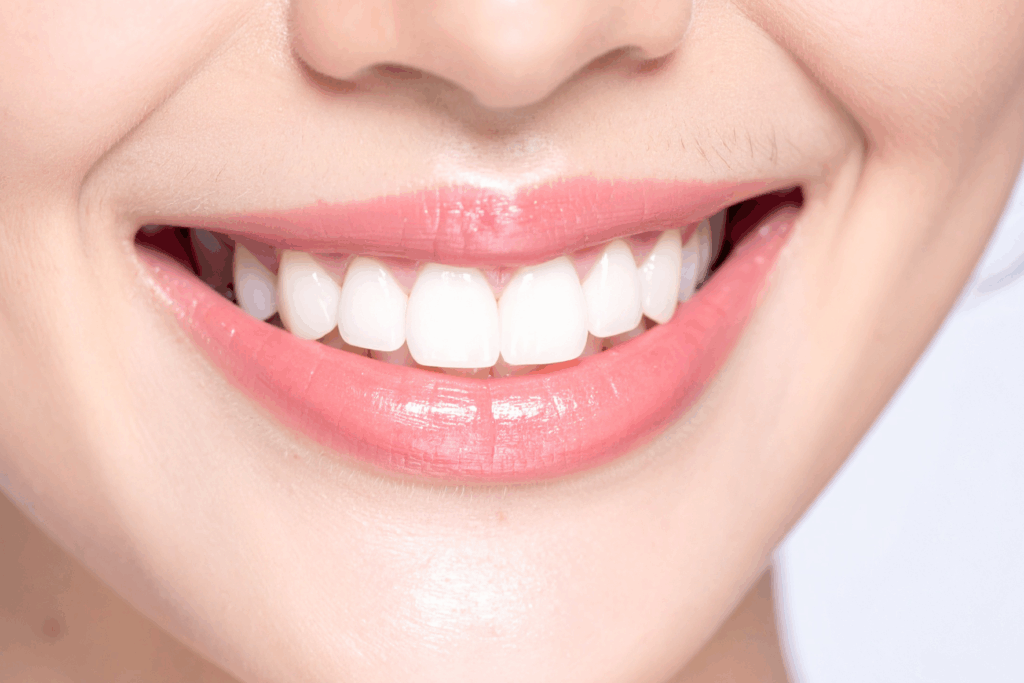
Veneers can cover stains and discolouration that whitening won’t shift, even out chipped or worn edges, close small gaps, and make slightly crooked teeth look straighter. What they don’t do is actually straighten your teeth. If your teeth are significantly out of line, veneers can only disguise it, and sometimes that means removing more tooth than is wise. In those cases, straightening first is usually the better path.
Veneers are also often planned alongside other restorative work. If one front tooth needs a crown and the teeth beside it need a colour change, for example, veneers and a dental crown can be made together so everything matches. That kind of joined-up planning is much easier when one dental practice looks after the whole smile.
For many patients from Redland Bay, that joined-up planning is one of the main benefits of seeing a dentist who offers broader dental services. Our dentists can assess whether the concern is purely cosmetic or whether it overlaps with general dentistry, oral wellbeing, wear, fracture, or bite problems.
Composite in One Visit or Porcelain Over Two
There are two main types of veneers. Composite veneers are built up directly on your teeth using tooth-coloured resin, usually in a single visit, and generally cost less. They can be polished and repaired, but they’re more prone to staining and chipping over time.
Porcelain veneers are made by a dental lab from your impressions and bonded at a second visit. Porcelain is strong, resists staining well, and has a natural translucency that mimics enamel. It’s the more durable dental option, and the more expensive one. We’ll explain which suits your teeth, your budget, your smile, and the look you’re after.
| Composite veneers | Porcelain veneers | |
|---|---|---|
| How they're made | Built up directly on your teeth using tooth-coloured resin | Made by a dental lab from your impressions |
| Visits | Usually a single visit | Bonded at a second visit |
| Cost | Generally less | More expensive |
| Staining and chipping | More prone over time, but can be polished and repaired | Strong and resists staining well |
| Look | Tooth-coloured | A natural translucency that mimics enamel |
This is where clear dentistry advice matters. Our dentists will explain the pros and cons of each dental treatment so you are not choosing on price alone. Some patients want the convenience of a simpler cosmetic dental option, while others prefer the longevity and finish of porcelain. Good dental planning is about matching the treatment to the person, not forcing everyone into the same answer.
Who Veneers Suit, and Who They Do Not
Veneers can be a great option for healthy teeth that are stained, chipped, worn, uneven, or slightly gappy. They may not suit you if:
Veneers may not suit you if
- You have active decay or gum disease, which needs treating first
- You grind or clench heavily, unless it's managed with a night guard
- Your teeth are significantly crooked or your bite is off, where straightening may be better
- There isn't enough healthy enamel left to bond to
- You only want whiter teeth, which whitening may achieve with far less commitment
If after talking it through you decide veneers aren’t for you, that’s completely fine. We’ll help you find an option that suits you better.
Before any cosmetic dentistry work, we’ll do a full check-up, because veneers bonded onto teeth with hidden decay or inflamed gums won’t last. If it’s been a while since your last visit, that’s fine. Nobody here will judge you for how long it has been. We’ll simply get your teeth and gums healthy first, then plan the cosmetic dentistry side once there’s a solid foundation.
That foundation matters for both general oral health and long-term cosmetic dentistry success. For some patients, the right first step is not porcelain at all, but a scale and clean, gum treatment, or repair of an older filling. Our dental team will tell you honestly if another treatment should come first. This also applies to children. Porcelain veneers are generally not the starting point for children, and our dentists will be cautious with cosmetic dentistry while a child or teenager is still developing.
Planning the Shade, Length, and Edge
Good veneers start with good planning. We look at your face, your lip line, how much tooth shows when you talk and smile, and the shape of your other teeth. Then we plan the shade, how long the teeth should be, and how the edges should look. A very flat, uniform, bright-white set can look artificial. Slight natural variation usually looks better.
If you’re considering whitening the rest of your teeth, do it before your veneers are made. Porcelain doesn’t change colour with whitening, so we’ll match your veneers to your final shade.
For patients from Redland Bay and nearby Redland suburbs, this planning appointment is often where the whole case becomes clearer. A dentist can explain what would actually change, what would stay the same, and whether the result you want needs porcelain or another cosmetic treatment. If you want to book time simply to discuss shade, length, and shape, you are welcome to do that before committing to any form of dentistry.
Enamel Removal: The Honest Trade-Off
This is the part some places skip over. To make room for a porcelain veneer, a thin layer of enamel, usually a fraction of a millimetre, is generally removed from the front of the tooth. That’s what lets the veneer sit flush rather than looking bulky.
Removed enamel doesn’t grow back. That makes porcelain veneers essentially irreversible: once you have them, that tooth will always need a veneer or similar covering. It doesn’t make them a bad choice. It makes them a decision worth taking time over, with all the facts. Some cases need very little preparation, and composite veneers often need little or none, which is one reason they’re worth discussing.
This is exactly why an experienced dentist should explain the irreversible part clearly. Good dentistry is not about pushing a cosmetic treatment faster than necessary. It is about making sure patients understand the long-term commitment and how it fits with their dental health and future care.
Trial Smiles and Temporaries
- PlanningWe plan the shade, length and edges around your face, lip line and other teeth.
- Trial smileDepending on your case, a mock-up over your teeth previews the planned shape before anything permanent is done.
- Preparation and temporariesA thin layer of enamel is prepared, and temporaries may be placed while the lab makes your final veneers.
- Bonding dayEach veneer is checked for fit and colour, then bonded in place, any excess is removed, and your bite is checked.
Depending on your case, we may be able to show you a preview of the planned shape before anything permanent is done, such as a mock-up placed over your teeth. It’s your chance to say “a bit shorter” or “less square” before the lab makes your final veneers.
Between the preparation visit and bonding day, temporaries may be placed to protect the teeth and give you a feel for the new shape. Treat them gently: avoid biting hard foods with your front teeth and skip sticky lollies until your final veneers are on.
For many patients, this preview step is one of the most reassuring parts of the process. It gives you a better idea of the proposed cosmetic result before the final treatment is completed. If you have questions at this stage, contact our dentistry practice at Alexandra Hills Dental and let us know. Our dentists would rather make an adjustment early than have you stay unsure.
Bonding Day: The Final Fit
When your porcelain veneers come back from the lab, we check each one for fit and colour before anything is permanent. The teeth are cleaned and prepared, the veneers are bonded in place, any excess is removed, and your bite is checked. Your new smile can feel a little strange for a few days as your lips and tongue adjust. If anything catches or your bite feels off, call us, and we’ll fine-tune it. Some people notice mild sensitivity for a few days after bonding, which usually settles on its own.
This stage is precise dentistry, and small details matter. A dentist will check not only the look of the veneers, but also the bite and how the result feels in function. Cosmetic dentistry still needs to work properly, not just look good in the chair.

Coffee, Red Wine, and Keeping Them Clean
Porcelain resists staining well, but the bonding edge and your natural teeth around it don’t.
Keeping veneers looking their best
- Rinse with water after coffee, tea or red wine
- Brush twice daily with a non-abrasive fluoride toothpaste, and floss every day
- Keep up your six-monthly check-ups and cleans
- Wear your night guard if you grind, and a mouthguard for contact sports
- Don't use veneers as tools: no opening packets, biting nails or chewing ice
Rinsing with water after coffee, tea, or red wine helps. Brush twice daily with a non-abrasive fluoride toothpaste, floss every day, and keep up your six-monthly check-ups and cleans so we can spot any issues early. If you grind your teeth, wear the night guard we make for you. And don’t use your veneers as tools: no opening packets, biting nails, or chewing ice. If you play contact sports, a mouthguard protects veneers the same way it protects natural teeth, and it’s a lot cheaper than replacing a chipped one.
Long-term success still depends on your everyday health habits and regular general dental services. Our dentists can review your veneers during routine check-ups and let you know if the margins are staying healthy. Good home care and regular dental maintenance matter just as much as the original cosmetic treatment.
Repairs, Replacements, and Longevity
With good care, porcelain veneers typically last 10 to 15 years, and they will need replacing at some point. Composite veneers usually need touching up or replacing sooner, but small chips can often be repaired in the chair. If a veneer chips, cracks, or comes loose, keep it if you can and call us. The tooth underneath still needs looking after, as decay can develop at the edges if cleaning slips.
If that happens, contact the practice as soon as you can. We offer a range of dental services, and our dentists can assess whether the issue needs urgent attention or whether it can be managed at a standard review appointment. Either way, quick action usually makes repair or replacement simpler.
Veneers, Bonding, or Whitening: Which First?
| Option | Best for | Tooth removed | Visits | Lasts |
|---|---|---|---|---|
| Whitening | Stains on otherwise good-looking teeth | None | 1 in-chair, or about 2 weeks at home | Fades gradually; top-ups help |
| Composite bonding or veneers | Chips, small gaps, minor shape changes | Little or none | Usually 1 | Shorter than porcelain; repairable |
| Porcelain veneers | Bigger changes to colour, shape and length | A thin layer of enamel | Usually 2 | Typically 10 to 15 years |
Many people start with whitening, see how they feel, and only then decide whether they need anything more.
For people in Redland Bay, QLD, that staged approach often makes sense financially as well as clinically. A dentist can explain which cosmetic treatment is likely to give the biggest improvement first, and whether a more conservative option is enough before moving to porcelain.
Book a Veneer Consultation From Redland Bay
- Bring your questionsAnd any quote you've had elsewhere, so we can compare like with like.
- Compare the routesWhitening, bonding or porcelain, and what each would change.
- Agree the detailsShade, length, and shape settled before anything is done.
Veneers done purely for looks usually attract little or no health fund rebate, so plan on covering most of the cost yourself. If paying it all at once is a stretch, three payment plan options, including AfterPay and Zip Pay, can split it into smaller amounts.
| Option | How it works |
|---|---|
| Health fund | Veneers done purely for looks usually attract little or no rebate. We're a preferred provider for CBHS, Australian Unity, HCF, Medibank and Bupa |
| Payment plans | Three payment plan options, including AfterPay and Zip Pay, to split the cost into smaller amounts |





Call 07 3824 4488 or book online. If you’re coming from Redland Bay, a Saturday morning consult gives you time to talk it through without watching the clock.
Alexandra Hills Dental provides both cosmetic and general dental services for people from Redland Bay, the wider Redland district and nearby parts of QLD. If you want to book, or if you would prefer to contact us first with questions about porcelain veneers, our team can help. Our dentists can also advise whether the concern is mainly cosmetic or whether another dental treatment should come first.
Families sometimes also ask whether cosmetic options are suitable for children. In most cases, our approach with children is more focused on oral health, development and conservative general dentistry, with cosmetic treatment considered more cautiously.
Any surgical or invasive procedure carries risks. Before proceeding, you should seek a second opinion from an appropriately qualified health practitioner.
Porcelain Veneers Redland Bay: Frequently Asked Questions
How long do porcelain veneers last?
With good care, porcelain veneers typically last 10 to 15 years, and they will need replacing at some point.
Are porcelain veneers permanent?
Essentially, yes. A thin layer of enamel is generally removed, and removed enamel doesn't grow back, so that tooth will always need a veneer or similar covering.
Composite or porcelain veneers?
Composite veneers are built up directly in a single visit and generally cost less, but stain and chip more easily. Porcelain veneers are lab-made, bonded at a second visit, and are stronger and more stain-resistant.
Can veneers straighten my teeth?
No. Veneers can make slightly crooked teeth look straighter, but they don't move them. If your teeth are significantly out of line, straightening first is usually the better path.
Who are veneers not suitable for?
People with active decay or gum disease, heavy grinding that isn't managed, significantly crooked teeth or bite problems, or not enough healthy enamel. If you only want whiter teeth, whitening may be enough.
Should I whiten before getting veneers?
Yes. Porcelain doesn't change colour with whitening, so we'll match your veneers to your final shade.
Does my health fund cover veneers?
Veneers done purely for looks usually attract little or no health fund rebate. Three payment plan options, including AfterPay and Zip Pay, can split the cost.
What if a veneer chips or comes loose?
Keep it if you can and call us. Small chips in composite can often be repaired in the chair.