
Wisdom Teeth Causing Trouble? Here Is the Path Forward
Wisdom tooth removal at Alexandra Hills Dental starts with working out whether the tooth needs to come out at all, because plenty don’t, and then either a straightforward extraction in our chair or a referral to an oral surgeon for the trickier cases. If the last time someone mentioned your wisdom teeth it came with a big quote and not much explanation, or a mate spent a week looking like a chipmunk afterwards, it’s fair to be wary. Is it actually urgent, or is someone just keen to book surgery? Getting a straight answer to that is the first job.
For patients from Redland Bay dealing with wisdom tooth pain, swelling, or concerns about how their wisdom teeth are developing, a dental assessment can help establish what treatment is appropriate. Our dentist will examine the teeth and surrounding gums, discuss your symptoms, and explain whether monitoring, dental care, or wisdom tooth removal is the sensible next step. You can book an appointment with our dental team or email us if you are unsure whether your wisdom teeth need attention.

The Third Molars and Why They Are the Problem Child
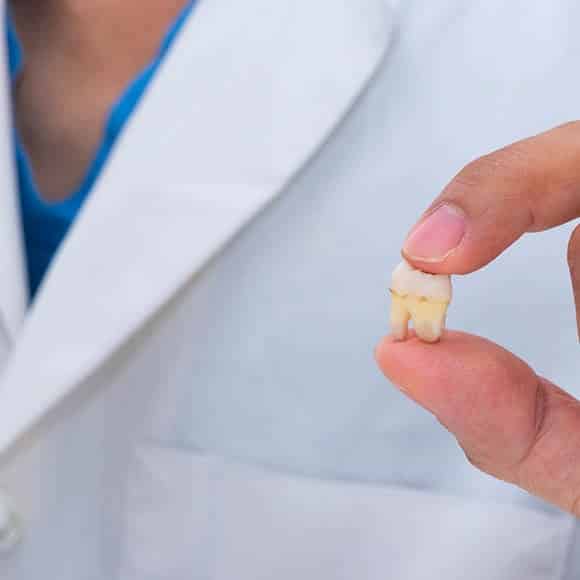
Wisdom teeth are your third molars, the last teeth to come through. They usually arrive somewhere between the late teens and mid-twenties, long after the rest of your adult teeth have claimed the available space.
That timing is the whole problem. If your jaw isn’t big enough, the wisdom tooth has nowhere to go. It may get stuck under the gum, come through crooked, or only make it part of the way.
Some people’s wisdom teeth erupt perfectly and never cause a day’s grief. Others cause pain, infection, crowding, or damage to the tooth in front. Not every wisdom tooth needs to come out, and we’d rather tell you that honestly than book you in for treatment or surgery you don’t need.
A general dentist can monitor wisdom teeth over time, particularly when they are not causing pain or affecting the neighbouring teeth. Regular dental check-ups also give patients an opportunity to ask questions about wisdom tooth removal and whether any changes can be seen around the back teeth. Preventive dentistry is often about knowing when dental care or treatment is needed and when leaving healthy teeth alone is the better option.
Good oral health also matters around wisdom teeth because the very back of the mouth can be harder to keep clean. Your dentist can show you ways to improve oral hygiene around these teeth and protect the rest of your smile.
Horizontal, Vertical and Angled Impaction
An impacted wisdom tooth is one that’s trapped. The way it’s trapped matters, because it changes how hard it is to remove:
| Type | How the tooth sits | What it means |
|---|---|---|
| Vertical impaction | Upright but stuck beneath the gum or bone | Often the simplest of the impacted types |
| Angled (mesioangular) impaction | Tilts forward into the molar in front | The most common pattern, and can damage that neighbouring tooth |
| Horizontal impaction | Lies on its side | Usually the most complex to remove and more likely to need surgery |
| Distoangular impaction | Tilts backwards, towards the back of the jaw | Assessed on the X-ray |
The position of impacted wisdom teeth also influences the type of extraction or removal that may be recommended. Some extractions are similar to other routine dental extractions, while others require a surgical approach because part of the tooth remains beneath the gum or bone. Your dentist will explain the difference before anything is booked.
Pericoronitis: The Flare-Up Behind the Pain
When a wisdom tooth only partly breaks through, a flap of gum often sits over it. Food and bacteria get trapped underneath, and the gum becomes inflamed and infected. That’s pericoronitis.
It tends to flare up, settle, then flare again, often when you’re run down or stressed. If it keeps coming back, removal is usually the long-term fix. If you have swelling that’s spreading, a fever, or trouble swallowing, call us straight away so we can thoroughly check before recommending any treatment.
Signs of pericoronitis
- A swollen, tender gum at the back
- Pain when you bite
- A bad taste
- Bad breath
- Sometimes, difficulty opening your mouth
Dental pain around wisdom teeth should not automatically be assumed to mean extraction is required. Other teeth, the surrounding gum, and general oral health problems can sometimes cause similar symptoms. An examination allows the dentist to identify the likely source of the pain and recommend suitable care. Patients with recurring wisdom tooth pain can contact our dental team or email us to arrange an assessment rather than waiting for another flare-up.
What the OPG X-Ray Tells Us
A standard small X-ray only shows a few teeth at a time. An OPG (orthopantomogram) is a panoramic X-ray that shows the whole jaw in one image.
What an OPG shows in one image
- All four wisdom teeth
- The roots
- The surrounding bone
- The sinuses
- The nerve canal in the lower jaw
- How the wisdom teeth sit against your other teeth
That nerve is the big one. It supplies feeling to your lower lip, chin, and tongue. If a root sits close to or wraps around it, we need to know before planning anything. Sometimes a 3D scan is recommended for a closer look. We’ll explain which imaging you need, why, and where and how it’s done, before booking it.
The X-ray also helps the dentist assess the relationship between the wisdom teeth and the other teeth in your mouth. This information is important when planning dental extractions because the shape and position of the roots can change how straightforward the removal is. It also helps determine whether the procedure can be completed through our general dentistry services or whether referral to an oral surgeon is more appropriate.
Before any extraction, our dentists also go through a series of health questions covering medications and medical history, because that affects how we plan your treatment safely.
That discussion is part of planning care around the individual patient rather than treating every wisdom tooth the same way. If you have questions about medications, previous dental work, previous extractions, treatment, how it affects your smile, or concerns about pain management, tell your dentist during the consultation.
Removing One, Two, or All Four
There’s no rule that says all four have to come out together. The decision depends on your X-rays, your symptoms, your general health, and, realistically, your schedule.
| Situation | Sensible path |
|---|---|
| Only one is causing trouble | Remove that one, and leave healthy teeth alone |
| Two on the same side | Remove them at once, so you only have one recovery period |
| All four impacted | Removing them together in a hospital setting |
Sometimes only one is causing trouble, and the others are perfectly healthy. Sometimes it makes sense to remove two on the same side at once so you only have one recovery period. And sometimes, if all four are impacted, removing them together in a hospital setting is the sensible path. If you’re juggling work and school runs, we can talk through timing so treatment and recovery doesn’t land in the middle of something important.
Wisdom teeth removal is therefore planned according to the teeth that actually require attention. Some patients only ever need one wisdom tooth removed. Other patients may eventually require several extractions. Your dentist can explain the advantages and considerations of completing multiple wisdom teeth extractions at the same appointment compared with managing treatment separately.
Maintaining good oral health around the remaining teeth is equally important after an extraction, and your regular dentistry visits can help keep the rest of your smile healthy.
Local Anaesthetic and Happy Gas Options
Most straightforward wisdom tooth extractions we do in the chair are done under local anaesthetic, which numbs the tooth, gum, and surrounding area. You’ll feel pressure, but you shouldn’t feel pain. As long as there are no major complications, the procedure usually takes less than an hour.

| Option | What it involves | Where |
|---|---|---|
| Local anaesthetic | Numbs the tooth, gum and surrounding area. You'll feel pressure, but you shouldn't feel pain | In our chair |
| Local anaesthetic with happy gas | Nitrous oxide to help you feel calmer | In our chair |
| Completely asleep | Done by an oral surgeon, usually in hospital | We arrange the referral |
If you’re nervous, and lots of people are, we also offer happy gas (nitrous oxide) to help you feel calmer. Combined with a team that explains each step before it happens and doesn’t rush you, that’s enough for many anxious patients. If you’d prefer to be completely asleep, that’s done by an oral surgeon, usually in hospital, and we’ll arrange the referral.
Our dental team can also discuss what to expect before, during, and after the removal appointment. For many patients, understanding the procedure ahead of time makes the experience easier to manage. If you have had a difficult dental experience previously, let your dentist know when you book or email our team beforehand.
Alexandra Hills Dental provides a range of general dentistry services in addition to wisdom tooth care, so your dentist can also consider the health of the surrounding teeth, gums, and overall smile when planning your care.
A great smile and good oral health are about more than one tooth. Our dentistry services are designed to help patients maintain healthy teeth and gums while protecting the appearance and function of their smile.
Swelling, Ice, and the Recovery Timeline
Most people are surprised by how manageable recovery is when they know what to expect.
Avoid smoking and alcohol for at least a day or two, as both irritate the extraction site.
Pain levels vary between patients and can also vary depending on how complex the extraction was. Your dentist will give you instructions appropriate to your treatment and explain what is expected during normal healing. Following those dental care instructions carefully can help protect the extraction site while the gum begins to recover so you can get that great smile back.
Keeping the rest of your mouth clean is also important for oral health during recovery. Your dentist can advise when to return to your normal brushing routine around the extraction area.
- First 24 hoursThe most noticeable discomfort, some tenderness, and mild bleeding. Bite gently on gauze and rest.
- Days 2 to 3Swelling usually peaks, then starts to ease. Ice packs on the cheek in short bursts can help. Most people return to work and light activity within two to three days.
- Days 4 to 7Discomfort should be steadily improving. If it's getting worse instead, call us.
- One to two weeksSoft tissues are well on the way to healing, though the bone takes longer.
What to Eat for the First Three Days
Stick with soft, cool or lukewarm foods
- Yoghurt
- Smoothies, eaten with a spoon, not a straw
- Soup that has cooled down
- Mashed potato, scrambled eggs, pasta and porridge
Avoid
- Hard, crunchy, chewy and spicy foods
- Chewing on the extraction side
- Straws completely, because the suction can dislodge the healing blood clot
As eating becomes more comfortable, you can gradually return to your normal diet. Keep the surrounding teeth clean according to the instructions provided by your dentist, but take care around the extraction site during the early stages of healing.
Dry Socket: Prevention and Warning Signs
After an extraction, a blood clot forms in the socket and protects the bone underneath while it heals. If that clot is lost too early, the bone is exposed. That’s dry socket, and it’s painful.
The warning sign is severe, throbbing pain that starts three to four days after the extraction, often spreading towards the ear, sometimes with a bad taste. To lower your risk: don’t smoke, don’t use straws, don’t spit forcefully, and avoid vigorous rinsing for the first 24 hours. If you think you’ve got dry socket, ring us. It’s very treatable, and you’re not left to figure it out on your own once you leave the chair.
To lower your risk of dry socket
- Don't smoke
- Don't use straws
- Don't spit forcefully
- Avoid vigorous rinsing for the first 24 hours
Call us if
- Severe, throbbing pain starts three to four days after the extraction
- Swelling gets worse after day three
- You develop a fever
- Numbness or tingling lasts longer than the anaesthetic should
Dry socket is one reason patients should contact their dentist when pain is increasing rather than improving after wisdom tooth removal. Your dental team can assess the extraction area and provide appropriate care to make the healing period more comfortable.
Also call us if swelling gets worse after day three, if you develop a fever, or if numbness or tingling lasts longer than the anaesthetic should.
If you are unsure whether what you are experiencing is a normal part of recovery, contact us. You can call or email the practice with questions. It is better to ask your dentist than to sit at home worrying about worsening pain after dental work.
Cases We Refer to an Oral Surgeon
Your general dentist will sometimes refer your wisdom tooth extraction to an oral surgeon. At Alexandra Hills Dental, that usually happens for one of three reasons. In each case, a surgeon with the right setting and equipment gives you the safest outcome.
We usually refer when
- You'd prefer to be put to sleep for the extraction
- The roots sit close to or curve around a nerve
- The roots are close to your sinus
We have surgical specialists we refer to, so the procedure and healing go as smoothly as possible. If you’re unsure at any stage, you can contact the specialist or us directly. If you’re treated in hospital, your hospital cover, rather than extras, may help with some costs, so check with your fund.
A referral does not mean something has gone wrong. It simply means your dentist believes the wisdom tooth removal is better suited to specialist oral surgery. Our dental team can still help coordinate your care, explain the referral process, and answer general questions before or after the extraction.
For other routine dental needs, patients can continue seeing our dentists for general dentistry, preventive care and other services designed to maintain healthy teeth, good oral health and a confident smile.
Book a Wisdom Teeth Assessment From Redland Bay
If wisdom teeth are causing pain, swelling or repeated problems, you can book a dental assessment with Alexandra Hills Dental. Patients from Redland Bay can contact our team by phone, book online, or email us with general questions about appointments and dental services. A dentist can then assess the wisdom teeth and explain whether monitoring, extraction, or referral is appropriate.
You can also email the practice if you would like more information before making an appointment. Our team can help with general questions about wisdom teeth, oral health, dentistry services, and what to expect when you visit the dentist.
- Get it looked atThe first consultation is free. Call 07 3824 4488 or book online.
- Know what you're dealing withExam and X-ray, then a clear answer on whether it needs to come out.
- Here or with a surgeonSimple cases in our chair, complex ones referred to a specialist we trust.
The fee depends on whether the tooth has come through and how complicated it is to remove, so you’ll get an estimate before anything is booked. Health fund rebates are processed at the desk on the day, and if the total is more than the budget can take in one hit, three payment plan options, including AfterPay and Zip Pay, plus SuperCare are there to spread it.
The cost of wisdom tooth removal can differ because not all extractions involve the same level of complexity. A straightforward extraction of an erupted wisdom tooth is different from surgical removal of an impacted tooth. Your dentist will explain what is involved and the associated fees before you decide whether to book.
| Option | How it works |
|---|---|
| Health fund | Preferred provider for CBHS, Australian Unity, HCF, Medibank and Bupa, with rebates processed at the desk on the day through HICAPS |
| Payment plans | Three payment plan options, including AfterPay and Zip Pay |
| SuperCare | A superannuation-based option for funding dental treatment |
| Hospital cases | If you're treated in hospital, your hospital cover, rather than extras, may help with some costs |





If it’s your teenager who needs them out, school holidays give them a few days at home to recover without missing class. It pays to book the assessment a term ahead so there’s time to plan. And if the pain has already started, don’t wait for the holidays. Ring before 10 am for a same-day appointment.
Whether the concern is one painful wisdom tooth, several impacted wisdom teeth, or simply wanting to know whether future removal is likely, an assessment gives you a clearer plan. Contact Alexandra Hills Dental by phone or email to book with a dentist, ask about our wisdom tooth services, or discuss questions about dental extractions, oral health, or general dentistry.
Healthy wisdom teeth do not automatically need removal, and our focus is on recommending care when there is a dental reason for it. If no procedure is required, your dentist may simply recommend monitoring the teeth as part of your regular dental care.
Regular dentistry visits also help us monitor the rest of your oral health, including your gums, neighbouring teeth and smile. If anything changes between appointments, contact or email our team, and we can advise whether it should be checked sooner.
Any surgical or invasive procedure carries risks. Before proceeding, you should seek a second opinion from an appropriately qualified health practitioner.
Wisdom Tooth Removal Redland Bay: Frequently Asked Questions
Do all wisdom teeth need to be removed?
No. Plenty don't. A general dentist can monitor wisdom teeth over time, particularly when they are not causing pain or affecting the neighbouring teeth.
How long does wisdom tooth removal take?
Most straightforward extractions in the chair usually take less than an hour, as long as there are no major complications.
What is pericoronitis?
When a wisdom tooth only partly breaks through, a flap of gum can trap food and bacteria, and the gum becomes inflamed and infected. If it keeps coming back, removal is usually the long-term fix.
Why do I need an OPG X-ray?
An OPG shows the whole jaw in one image, including all four wisdom teeth, the roots, the surrounding bone, the sinuses and the nerve canal in the lower jaw.
Can I be asleep for wisdom tooth removal?
Yes. That's done by an oral surgeon, usually in hospital, and we'll arrange the referral. In our chair, we use local anaesthetic, with happy gas available if you're nervous.
How long is the recovery?
Swelling usually peaks around days 2 to 3, and most people return to work and light activity within two to three days. Soft tissues are well on the way to healing within one to two weeks.
What is dry socket?
The blood clot protecting the socket is lost too early, exposing the bone. The warning sign is severe, throbbing pain starting three to four days after the extraction. It's very treatable, so ring us.
How much does wisdom tooth removal cost near Redland Bay?
The fee depends on whether the tooth has come through and how complicated it is to remove, so you'll get an estimate before anything is booked.